


 русский
 Español
Cutting Tools Are Used to Convert Raw Material into Functional Parts Cutting tools are the hardened, wear-resistant elements that shear away unwanted material from a workpiece to create a finished component. They are applied in e...
READ MORE
What Are Cutting Tools Used For? Applications, Materials, and CNC Machining Insights
Content
- 1 Cutting Tools Are Used to Convert Raw Material into Functional Parts
- 2 What Are Cutting Tools? Types, Materials, and How They Work
- 3 Which Industries Use Cutting Tools and How
- 4 Cutting Tools in Mold Making
- 5 Cutting Tools in Precision Parts Manufacturing
- 6 Cutting Tools for Aerospace and Superhard Alloys
- 7 How Cutting Tool Selection Affects Machining Results
- 8 Frequently Asked Questions About Cutting Tools
- 8.1 What are cutting tools made of?
- 8.2 Are cutting tools the same as machine tools?
- 8.3 What industries use cutting tools the most?
- 8.4 What cutting tool is best for hardened steel above 50 HRC?
- 8.5 Can EDM machines cut without mechanical cutting tools?
- 8.6 How do tool coatings affect cutting performance?
- 9 Cutting Tools Are the Foundation of Machining
Cutting Tools Are Used to Convert Raw Material into Functional Parts
Cutting tools are the hardened, wear-resistant elements that shear away unwanted material from a workpiece to create a finished component. They are applied in every machining operation that shapes metal, including milling, turning, drilling, tapping, broaching, and electrical discharge machining (EDM).
The direct answer to what cutting tools are used for is straightforward: cutting tools transform raw metal, plastic, graphite, and composite blanks into functional parts for mold making, automotive production, aerospace manufacturing, and precision engineering. Without a cutting edge, a rough casting or forging cannot become a precise component ready for assembly.
Beyond shaping parts, cutting tools control the economics of machining. Tool life, cycle time, scrap rate, and cost per piece are all directly influenced by the cutting edge. Choosing the wrong tool often results in poor surface finish, dimension drift, sudden tool breakage, and wasted material, all of which add cost to every batch produced.
What Are Cutting Tools? Types, Materials, and How They Work
A cutting tool is any implement with one or more sharp edges that separates a chip of material from the workpiece. The tool must be harder than the material being cut, retain its hardness at high cutting temperatures, and resist abrasive wear for as long as possible. The success of a cutting operation depends on the combination of tool substrate, coating, geometry, and the rigidity of the machine it runs in.
Common Substrates and Coatings
The four most common cutting tool substrates are high-speed steel (HSS), carbide, ceramic, and cubic boron nitride (CBN). Carbide is the most widely used because it is harder than HSS, can be manufactured in almost any geometry, and operates at much higher cutting speeds. Coatings such as titanium aluminum nitride and aluminum titanium nitride reduce friction, protect the substrate from heat, and extend tool life by a significant margin.
| Tool Type | Primary Function | Typical Workpiece Materials | Machines Used With |
|---|---|---|---|
| End mill | Milling flat surfaces, slots, contours | Steel, aluminum, mold steel | Vertical machining centers, gantry mills |
| Turning insert | Turning external and internal surfaces | Stainless steel, titanium, cast iron | CNC lathes |
| Twist drill | Creating round holes | Steel, cast iron, stainless | CNC machining centers |
| Tap | Cutting internal threads | Steel, aluminum | CNC tapping centers |
| EDM electrode | Eroding complex cavities with electrical discharges | Copper, graphite | Electrical discharge machines |
Tool geometry is just as important as the material. The rake angle and helix angle determine chip flow and cutting force. A positive rake angle is ideal for aluminum and soft steel because it cuts with lower force, while a negative rake angle is preferred for hardened steels because it holds a stronger edge. Relief angle also affects tool life and surface finish by reducing rubbing friction behind the cutting edge.
Which Industries Use Cutting Tools and How
Cutting tools are used in every manufacturing sector that produces mechanical components. Some of the largest employers of cutting tools are listed below, along with the specific machining needs they typically face.
- Mold making: End mills shape cavities and cores, while EDM electrodes cut deep ribs, sharp corners, and textures. Mold shops run both subtractive cutting and EDM to achieve the final geometry.
- Automotive: Turning inserts and milling cutters machine engine blocks, transmission parts, and body dies. Production lines rely on high-throughput tooling with long, predictable tool life.
- Aerospace: Specialized cutting tools handle titanium, Inconel 718, and nickel-based superalloys. EDM drilling tools create cooling holes in turbine blades and combustion chambers.
- Electronics: Small-diameter end mills and graphite electrodes produce precision molds for connectors, housings, and semiconductor components.
- General engineering: Standard drills, taps, and end mills produce shafts, brackets, flanges, and machine frames used in everyday equipment.
The industry you serve determines which cutting tools you use, which machine platform you need, and which cutting parameters you run. A mold shop processing graphite electrodes needs a rigid CNC engraving milling machine with high spindle speed and effective dust extraction. A precision component shop needs a vertical machining center that can hold tight tolerances. An aerospace facility needs EDM and electrochemical machines for superalloy work. Understanding these connections helps you make better purchasing decisions. If you are exploring larger and heavier machining requirements, read our CNC gantry milling machine knowledge guide to see how those platforms fit into production.
Cutting Tools in Mold Making
Mold making is one of the largest application areas for cutting tools. Mold components are typically machined from P20, 718H, H13, S136, and aluminum alloys, with copper and graphite used for electrodes. The manufacturing sequence for a mold cavity usually progresses through a series of material removal operations.
- Rough machining: Large-diameter indexable end mills remove the bulk of material quickly at high depth of cut.
- Semi-finishing: Smaller tools with tighter stepover prepare the surface for the final pass and avoid leaving hard-to-remove material.
- Finishing: Ball-nose end mills produce the final 3D contour with controlled surface roughness.
- EDM: Graphite or copper electrodes erode deep ribs, sharp internal corners, and fine textures that end mills cannot reach.
- Electrode machining: Graphite blocks are shaped with engraving milling machines before they are used as EDM electrodes.
EDM electrodes are a special kind of cutting tool. Instead of mechanically shearing metal, they remove material through controlled electrical discharges. This makes them the only reliable way to produce a 0.5 mm wide, 10 mm deep rib in hardened steel, or to create a square internal corner that a round end mill can never achieve. Melted and vaporized material is flushed away by dielectric fluid, leaving a precise cavity.
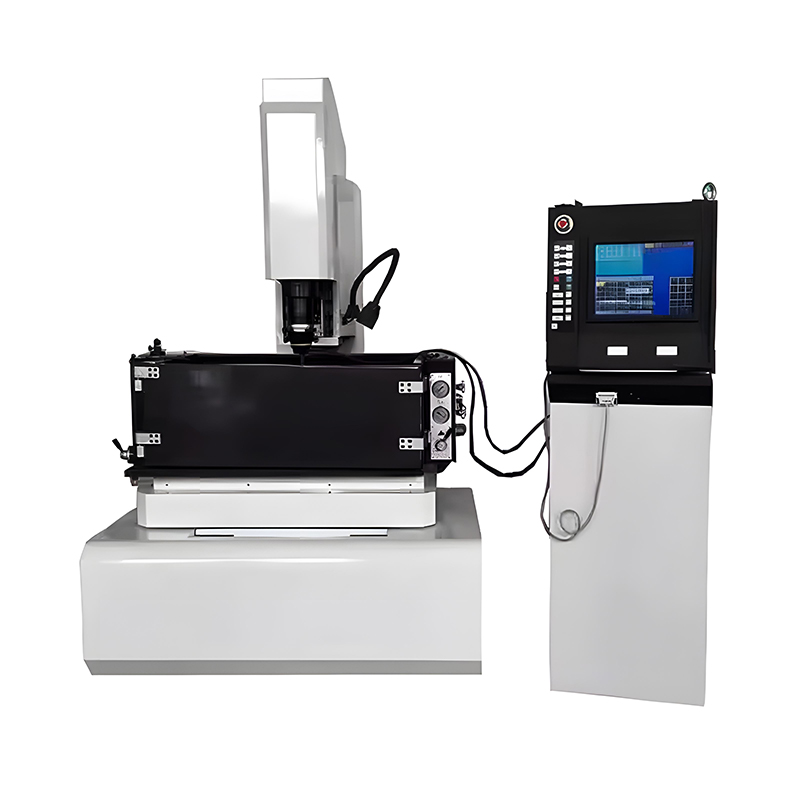 Compact EDM Machine for Precision Mold Cavity MachiningThis compact EDM system is ideal for micro-feature engraving and blind hole machining in mold cavities. It provides adaptive control and efficient cooling, making it suitable for small-scale die production.View Product →
Choosing the right EDM platform for cavity work is decisive. A machine like the CNC430 small CNC electrical discharge machine is designed for metal mold making, where electrode positioning accuracy and stable flushing directly influence cavity quality. Mold shops often pair EDM equipment with a CNC milling machine so they can machine the electrode and the cavity in one continuous workflow.
Cutting Tools in Precision Parts Manufacturing
Precision parts manufacturing covers hydraulic components, medical devices, optical instruments, and semiconductor machinery. These parts are defined by tight tolerances, fine surface finishes, and consistent repeatability from batch to batch. Cutting tools used in this sector are typically carbide end mills with TiAlN or AlTiN coatings, paired with high-speed spindles that run from 10,000 to 24,000 RPM.
Reaching micron-level accuracy is a system problem, not just a tool problem. The following conditions must be met:
- Tool runout must stay below 0.005 mm to avoid irregular cutting edges and dimension drift.
- The spindle taper and collet must be clean and free from nicks, because any contamination will deflect the tool.
- The workpiece clamping must be rigid enough to prevent chatter and vibration.
- The cutting parameters must maintain a constant chip load to avoid sudden tool overload and breakage.
When these conditions are met, a modern vertical machining center can hold ±0.005 mm tolerances on a routine basis. This is why high-speed CNC vertical machining centers remain the primary platform for precision components. Shops that require complex part geometry in a single setup often move to 5-axis machines, which reduce the number of clamping errors and improve total accuracy.
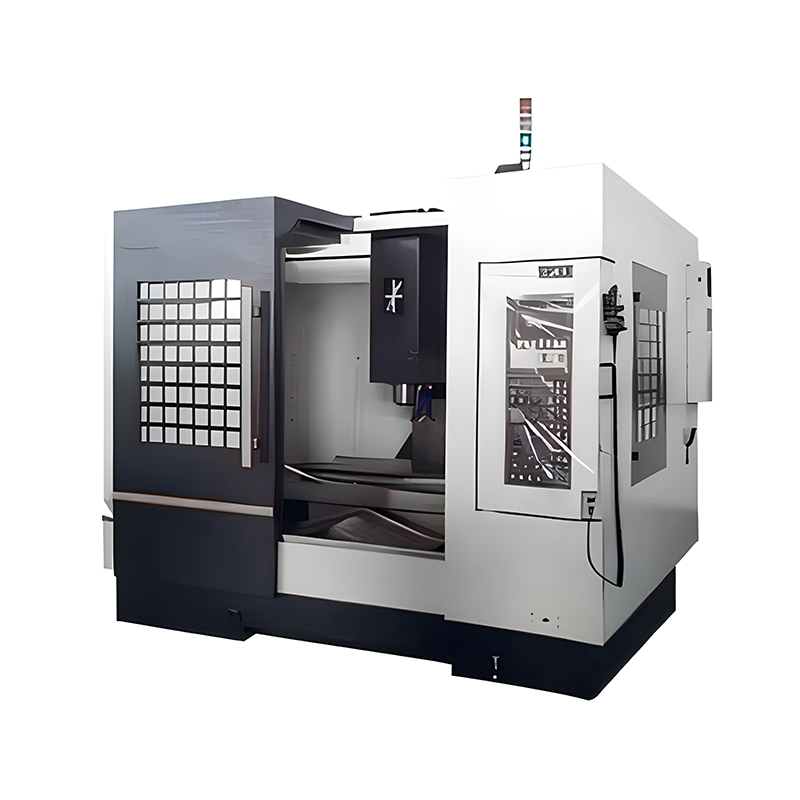 High-Speed 3-Axis CNC Vertical Machining Center for Precision PartsDesigned for tight-tolerance machining, this vertical center handles small to medium precision components. It offers high spindle speed, rigidity, and repeatability for consistent quality in batch production.View Product →
A machine such as the VMC850L high-speed 3-axis CNC vertical machining center is built for this class of work. It provides the spindle speed, rigidity, and repeatability needed when machining small and medium-size precision components that demand a high level of dimensional consistency. Selecting a machine that can hold your required tolerance is just as important as selecting the cutting tool itself.
Cutting Tools for Aerospace and Superhard Alloys
Aerospace cutting tools are used to machine titanium, Inconel 718, and other nickel-based superalloys. These materials have low thermal conductivity, which means heat concentrates at the cutting edge and quickly wears out standard carbide tools. For this reason, aerospace shops rely on a combination of advanced tooling and non-contact machining methods.
- Ceramic and CBN inserts are used for high-speed turning of hardened and superalloy materials.
- Coated carbide end mills with high flute count are used for milling when vibration is controlled.
- EDM drilling tools create cooling holes from 0.3 mm to 3 mm in diameter in turbine blades and combustion chambers.
- Electrochemical machining produces complex shapes with no tool contact and no thermal damage to the workpiece.
EDM and ECM are often the most reliable methods for superalloys because they do not depend on mechanical cutting force. EDM drilling tools can pierce hardened steel and heat-resistant alloys without tool deflection. Since the electrode never contacts the workpiece, there is no cutting force and no risk of damaging thin or delicate aerospace structures.
 5-Axis CNC EDM Drilling Machine for Aerospace Hole DrillingWith 5-axis control, this machine drills angle holes in superalloys like Inconel and titanium. It ensures burr-free results and minimal electrode wear, ideal for turbine cooling holes.View Product →
A machine like the XK430 high-speed CNC 5-axis EDM drilling machine is designed for aerospace-grade electrode drilling applications. Its multi-axis positioning capability allows angle holes to be drilled in superalloys with precision that mechanical drills cannot match. For shops that process Inconel or titanium, this type of machine closes the gap between conventional machining limits and actual production requirements.
How Cutting Tool Selection Affects Machining Results
Selecting the right cutting tool has a direct impact on machining cost and part quality. A poorly chosen tool can cause micro-chipping, excessive heat, built-up edge, chatter marks, or sudden breakage. The five factors that matter most in tool selection are listed below.
- Workpiece material: Hardness, machinability, and thermal conductivity determine the appropriate substrate and coating.
- Substrate and coating: Carbide with TiAlN works well for steel, while uncoated polished carbide is frequently preferred for aluminum or copper to reduce built-up edge.
- Tool geometry: Rake angle, helix angle, and relief angle control chip formation, cutting force, and heat generation.
- Machine rigidity: A weak spindle or thin-walled fixture causes chatter and shortens tool life dramatically.
- Cutting parameters: Speed, feed, and depth of cut must be consistent with the tool and material combination.
Shops that ignore these factors face dimension drift, poor surface finish, and high scrap rates. Shops that take the time to match tools to machines and materials gain better cost per part, longer tool life, and more predictable delivery times. In high-mix production, keeping a structured database of tested tool and parameter combinations is the most reliable way to protect repeatability.
Frequently Asked Questions About Cutting Tools
What are cutting tools made of?
Cutting tools are made from high-speed steel, carbide, ceramic, CBN, and PCD. Carbide is the most common substrate because it combines hardness, wear resistance, and the ability to hold a sharp edge at elevated cutting temperatures.
Are cutting tools the same as machine tools?
No. Cutting tools are the sharp edges that remove material. Machine tools are the power frames that hold and move those cutting edges. Examples of machine tools include CNC vertical machining centers, CNC gantry milling machines, and EDM machines.
What industries use cutting tools the most?
Mold making, automotive manufacturing, aerospace, electronics, and general engineering are the largest users. Every one of these industries depends on cutting tools to produce precise metal components that need exact dimensions and surface quality.
What cutting tool is best for hardened steel above 50 HRC?
CBN and ceramic inserts are the best choice for hardened steel. For milling, carbide end mills with a high-precision holder can also work, but the parameters must be conservative to avoid chip load overload and sudden breakage.
Can EDM machines cut without mechanical cutting tools?
Yes. EDM uses electrodes, which are a special type of cutting tool. They erode material through electrical discharge instead of mechanical shear. This allows hardened steel and superalloys to be machined with shapes that conventional tools cannot reach.
How do tool coatings affect cutting performance?
Coatings such as TiAlN and AlTiN reduce friction and heat at the cutting zone, which extends tool life by 30% to 100% in many applications, lowers cutting forces, and improves surface finish. Coating selection always needs to match the workpiece material.
Cutting Tools Are the Foundation of Machining
Cutting tools are used for one central purpose: to remove material and create a precise part. The specific tool you require depends on the workpiece material, the geometry being machined, the machine platform in use, and the tolerances that must be held.
For companies producing molds, precision components, or aerospace parts, the right choice of cutting tool and machine is a productivity decision. Discussing your specific materials, tolerance requirements, and production volume with a machine manufacturer helps you build a process that is efficient from day one. Contact us so we can help you match the right CNC platform to your cutting tool needs.
PREV:No previous article
NEXT:What Can a CNC Machine Do? 10 Core Operations, Materials, and Industries Explained
NEXT:What Can a CNC Machine Do? 10 Core Operations, Materials, and Industries Explained
Interested in cooperation or have questions?
News
-
-
A CNC machine can cut, drill, mill, turn, burn, and shape almost any conductive or composite material with an accuracy that manual machines rarely match. The real question is not what a CNC machine can do in theory, but what a sp...
READ MORE -
Nantong Sunway Ships Two Custom CNC Machines for Aero-Engine Turbine Blade Micro-Hole Drilling Nantong Sunway Science and Technology Development Co., Ltd. has completed production and shipped two custom-engineered CNC drilling cen...
READ MORE -
What Is a 5 Axis CNC Machine? A Direct Answer for Shop Owners Imagine a turbine blade arriving at your machine shop. It has complex sculpted surfaces, a twisted root form, and the supplier expects it on a two-week deadline. With ...
READ MORE
Related Products


-
Factory Address
Zhaxi Township Industrial Park, Nantong City, Jiangsu Province, China (west of Huaneng Power Plant)
-
Phone
+86-13615235768
+86-15950816906
-
Fax
+86-513-85632766
-
Email
pan.director@sunwayer.com
Stay Connected
lf you can't find the answer you're looking for, chat with our friendly team.
Stay Connected
Copyright © Nantong Sunway Science and Technology Development Co., Ltd. All Rights Reserved.
China CNC Equipment Manufacturers
Custom CNC Equipment Factory
