Vertical Machining Centers Built on Our Own Castings and Assembly Lines
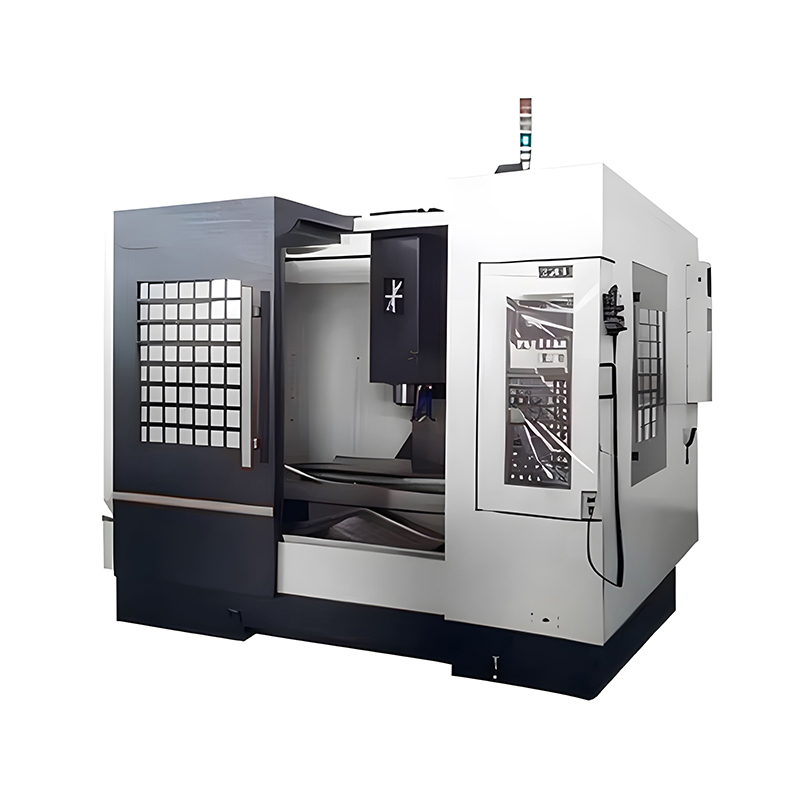
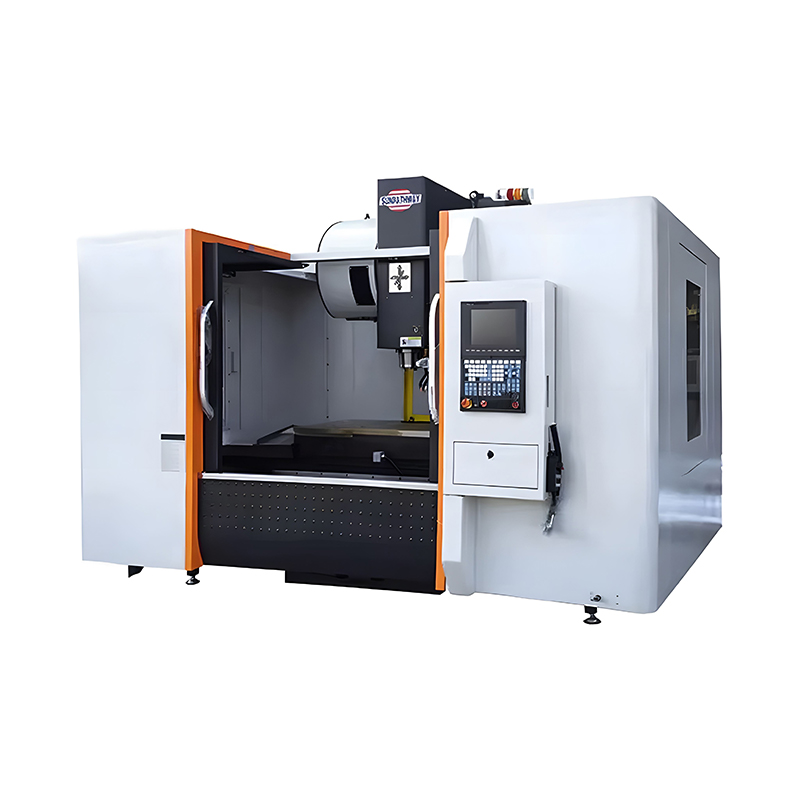
Nantong Sunway Science and Technology Development Co., Ltd. manufactures Vertical Machining Centers Manufacturers for mold shops, precision part producers, automotive component plants, and aerospace subcontractors. Our range covers 3-axis and 5-axis configurations, linear guide and hard rail designs, and table sizes from 800 × 500 mm to 2000 × 1200 mm. We produce the structural castings in-house, machine guideways on advanced grinders, and assemble and test each machine in Nantong, Jiangsu Province.
The VMC is the workhorse of a modern machining department. Our design philosophy keeps the basic frame rigid and symmetrical, then applies dynamic rigidity principles to the moving parts so the machine holds accuracy during high-speed motion and heavy cutting. We match the control system, spindle, tool magazine, and optional fourth or fifth axis to the parts you actually run.
Available Models and Where Each One Fits
VMC850L
High-speed 3-axis machining center with linear guides on all axes. Suited to aluminum and steel parts that need fast positioning and repeatable accuracy.
View VMC850L specifications
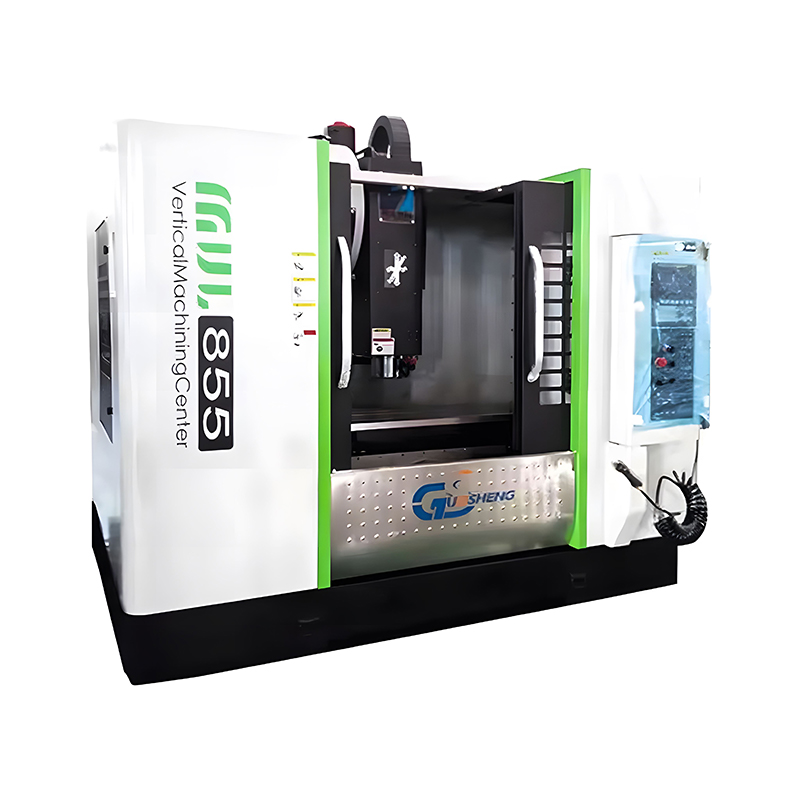
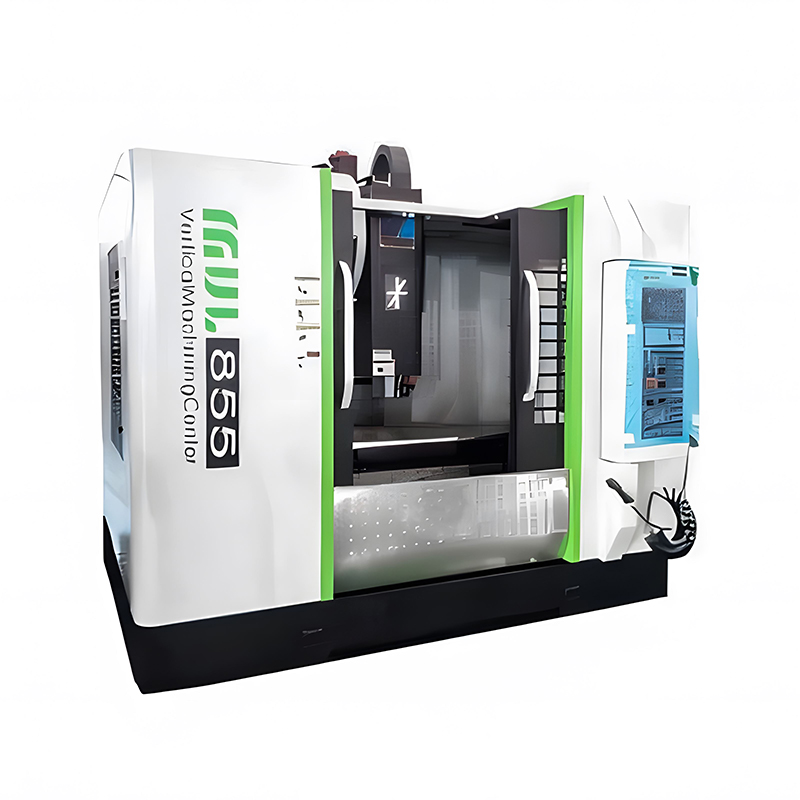
VMC-855
Hard rail high-speed vertical machining center. The box-way Z axis provides vibration damping for heavier cuts while the X and Y axes run on linear guides for rapid traverse.
View VMC-855 specifications
VMC-1370
Heavy-duty vertical machining center for larger workpieces. Built on a rigid cast iron bed with a wide guideway layout for stable roughing and fine finishing.
View VMC-1370 specifications
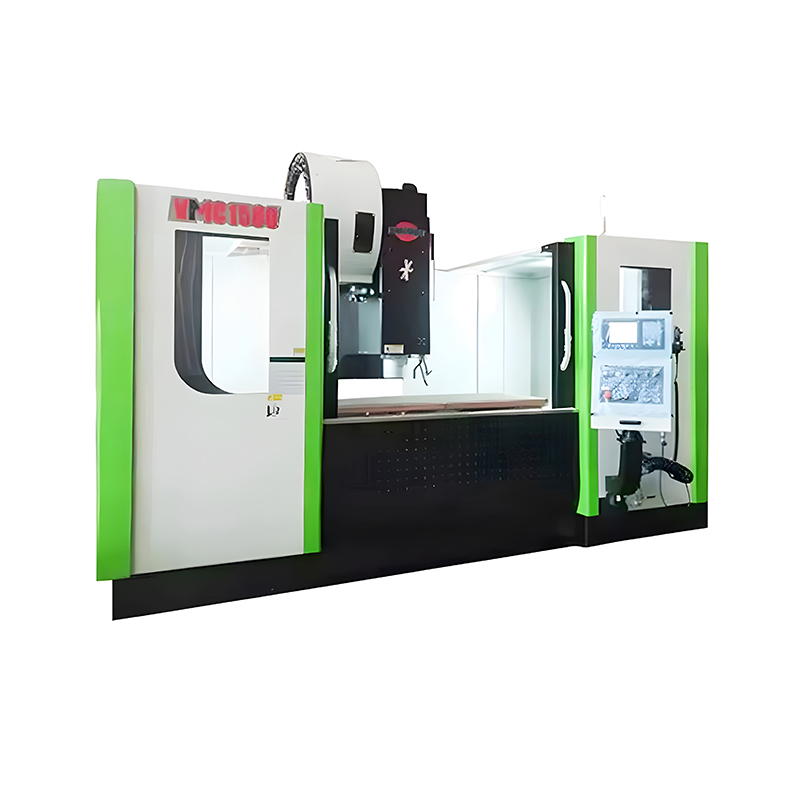
VMC-1580
Rigid-frame vertical machining center for demanding milling applications. The structure and drive package suit deep cuts and long cycle times with repeatable results.
View VMC-1580 specifications
VMC-1890
High-speed, high-precision CNC vertical machine center with a larger table and travel envelope. Suited to mold bases, aerospace structural parts, and long parts that need a single setup.
View VMC-1890 specifications
The wider 3-Axis, 5-Axis CNC Vertical Machining Center Suppliers range includes further configurations, and the Hard Rail Machining Center Series (Two Lines and One Hard) Suppliers page explains the structural logic behind the two-lines-and-one-hard layout in more detail. Both routes share the same casting, grinding, and assembly processes inside our factory.
Two Guideway Layouts: Linear vs. Two Lines and One Hard
Guideway choice drives the balance between rapid motion and cutting stability. The 3-axis line uses precision linear guides on X, Y, and Z for fast, accurate positioning in lighter materials and finishing work. Applications requiring aggressive roughing benefit from the two-lines-and-one-hard design, where the Z axis runs on a wide box way for damping and the X/Y axes remain on linear guides for speed.
Guideway and performance comparison for Sunway vertical machining center families
| Feature |
3-Axis / 5-Axis Linear Guide |
Hard Rail (Two Lines and One Hard) |
| X / Y guideway |
Linear guide |
Linear guide |
| Z guideway |
Linear guide |
Hard box way |
| Typical rapid traverse |
Up to 48 m/min |
Up to 48 m/min (X/Y) |
| Positioning accuracy |
Micron-level, ≤0.005 mm class |
| Best fit |
High-speed milling, drilling, tapping |
Roughing plus finishing of medium/large parts |
| Common workpieces |
Molds, electronic parts, aluminum components |
Automotive molds, aerospace structural parts |
Spindle, Control, and Automation Integration
Our machines use a 64-bit central processing unit and an industrial-grade PLC control platform. The control is compatible with Mitsubishi, SIEMENS, LNCSYNTEC, Weihong, and other systems, so you can standardize on a control family already familiar to your operators or choose the one your programming team prefers. Spindle horsepower, tool magazine capacity, and axis drive packages are selected at order stage.
- Tool magazine options to match tool count and change time.
- Fourth-axis and fifth-axis integration for multi-sided parts in one setup.
- Robot or pallet automation interfaces for continuous production.
- CAM compatibility with mainstream programming software and tooling brands.
Automation note: We plan the control interface, tool magazine position, and workholding layout with your cell integrator so the VMC can be connected to gantry loaders or robot tending without modifying the base machine.
Quality Control From Casting to Final Test
We produce castings in our own foundry and process structural parts in a factory covering approximately 10,000 square meters. A professional quality inspection team handles incoming material checks, process monitoring, and final machine testing. All guideway scraping and lapping are done manually, spindles are tested under load, and axial precision is calibrated in a real machining environment.
1 Casting inspection
2 Guideway grinding
3 Manual scraping
4 Load test and final check
Applications We Configure For
Our vertical machining centers are used in mold manufacturing, precision parts processing, hardware, automotive parts, electronics, and aerospace. Typical jobs include cavity milling in mold steels, drilling and tapping of transmission housings, and batch machining of aluminum structural components. We use the part drawing, material, batch size, and tolerance stack to select the correct model and options.
Information We Use to Prepare Your Configuration
To propose a machine that fits your production, we ask for the workpiece envelope, material, required tolerances, batch volume, and existing CAM or control preferences. We also plan for power supply, foundation, and lifting arrangements during installation.
Project data used to configure a vertical machining center
| Input Area |
What We Need |
Why It Matters |
| Workpiece |
Drawing, material, max dimensions, weight |
Determines table size, travel, and guideway type |
| Tolerance |
Critical dimensions, GD&T, surface finish |
Sets spindle, control, and calibration target |
| Production |
Batch size, cycle time target, uptime plan |
Informs automation, tool magazine, and options |
| Control |
Preferred CNC brand, CAM software, operator skill |
Ensures compatibility and training fit |
| Site |
Power supply, floor space, lifting capacity |
Supports installation planning and safety |
Installation, Training, and After-Sales Support
We provide on-site or remote installation guidance, basic training for operators and maintenance staff, and help with trial production debugging. Original spare parts are available with quick response, and we can supply remote video troubleshooting or scheduled maintenance plans. Our application engineers are familiar with mainstream CAM programming software and international tooling brands, so we can assist with tool path optimization after the machine is running.
Frequently Asked Questions
What materials can Sunway vertical machining centers cut?
Our machines handle aluminum, steel, cast iron, and other common metals used in molds, automotive parts, and aerospace components. The spindle, tooling, and guideway selection are matched to the material removal rate and surface finish required.
Can I order a machine with a different CNC control than the standard one?
Yes. We configure the control system according to your preference, including Mitsubishi, SIEMENS, LNCSYNTEC, Weihong, and others. This lets you align the machine with existing programming and maintenance practices.
What is the difference between the 3-axis line and the hard rail series?
The 3-axis line uses linear guides on X, Y, and Z for high-speed positioning and lighter cutting. The hard rail series uses a box way on Z with linear guides on X/Y, giving more damping for roughing and heavy cutting while retaining fast traverse and high accuracy.
How do you verify accuracy before shipment?
Our quality team performs incoming material inspection, process monitoring, and final machine testing. Guideways are hand-scraped and lapped, spindles are load-tested, and axial precision is calibrated in a machining environment. Acceptance records are prepared for each machine.
Do you support automation and fourth-axis integration?
Yes. We offer optional fourth-axis units, tool magazines, and interfaces for robot or pallet automation. The control platform supports the I/O and communication needed to integrate with your production cell.