Nantong Sunway Science and Technology Development Co., Ltd.
Home / Machines / Advanced EDM Systems for Aerospace Superhard Alloys
Advanced EDM Systems for Aerospace Superhard Alloys Factory
Our footprint spans the globe.
We provide quality products and services to customers from all over the world.

Advanced EDM Systems for Aerospace Superhard Alloys Manufacturers

    information to be updated

These EDM systems are specifically designed for the aerospace industry, addressing the high hardness and high-precision requirements of superhard materials. Using non-cutting-force technologies such as EDM and electrochemical machining, they effectively process difficult-to-machine materials like high-temperature alloys and titanium alloys, handling complex contours, microstructures, and deep small-hole drilling. Their core advantages lie in exceptional precision and surface quality, making them indispensable for manufacturing critical components such as turbine blades and disks.
About
Nantong Sunway Science and Technology Development Co., Ltd.
As a China Advanced EDM Systems for Aerospace Superhard Alloys Suppliers and Advanced EDM Systems for Aerospace Superhard Alloys Factory, Nantong Sunway Science and Technology Development Co., Ltd. is a comprehensive enterprise specializing in the R&D, manufacturing, and sales of numerical control equipment. Located in Nantong, Jiangsu Province, it enjoys convenient transportation and mature industrial supporting facilities. The company's main products include multiple series such as CNC machining centers, EDM forming machines, high-speed engraving and milling machines, small gantry milling machines, CNC EDM machines, and frame milling and engraving machines, which are widely used in mold manufacturing, precision parts processing, hardware, auto parts, electronics, aerospace, and other industries.
Since its establishment, Sunway has continuously increased investment in basic manufacturing and technical equipment. It has built a high-standard foundry and a large structural part processing factory covering an area of approximately 10000 square meters, and introduced multiple advanced guideway grinders and precision processing equipment, forming independent processing and assembly capabilities from structural parts to complete machines.
Sunway has always adhered to the business philosophy of "being honest, pursuing excellent quality, working diligently, and developing through innovation". It attaches great importance to the ex-factory quality of each piece of equipment, strictly implements the testing process, and strives to deliver each product with stability and reliability. With stable performance and good service, Sunway products have not only won customer praise in China but also been exported to Europe, America, Southeast Asia, and other regions.
We believe that high-quality products stem from down-to-earth accumulation. In the future, Sunway will continue to invest in process optimization, intelligent control, customer customization, and other directions, and strive to become your trustworthy machinery and equipment manufacturing partner for a long time.
Certificate of Honor
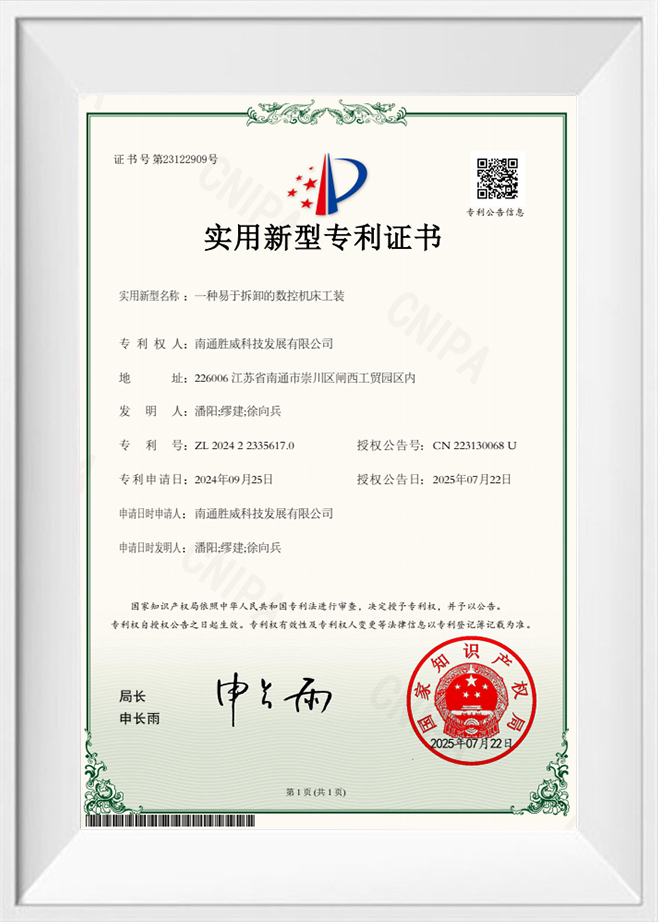
  • Utility Model Patent Certificate
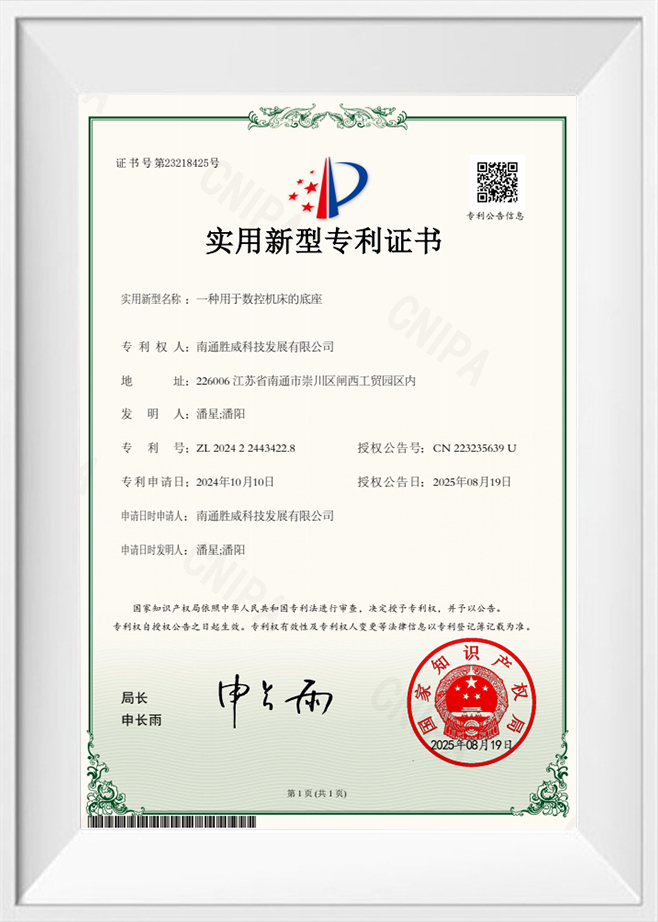
  • Utility Model Patent Certificate
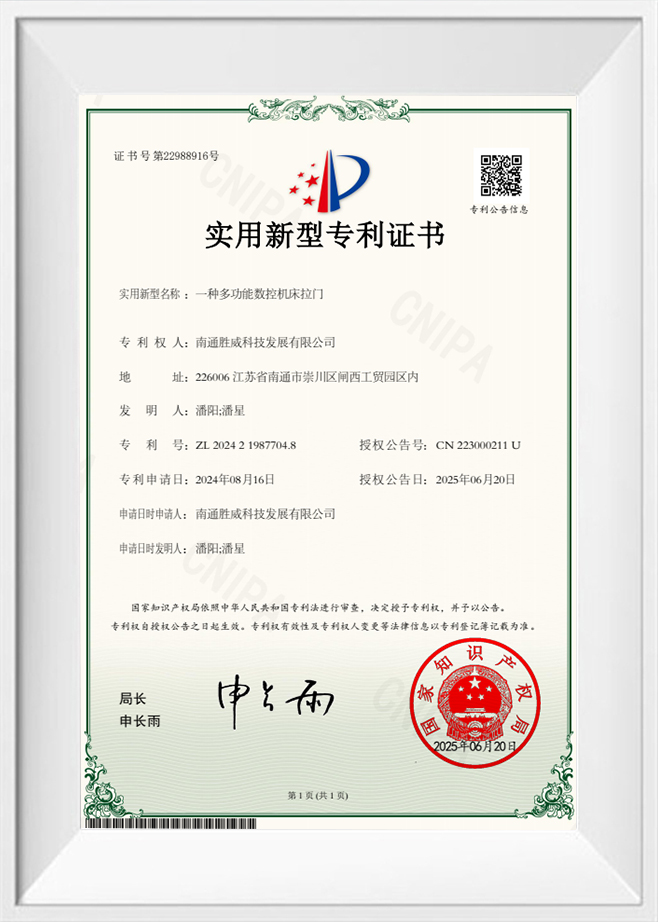
  • Utility Model Patent Certificate
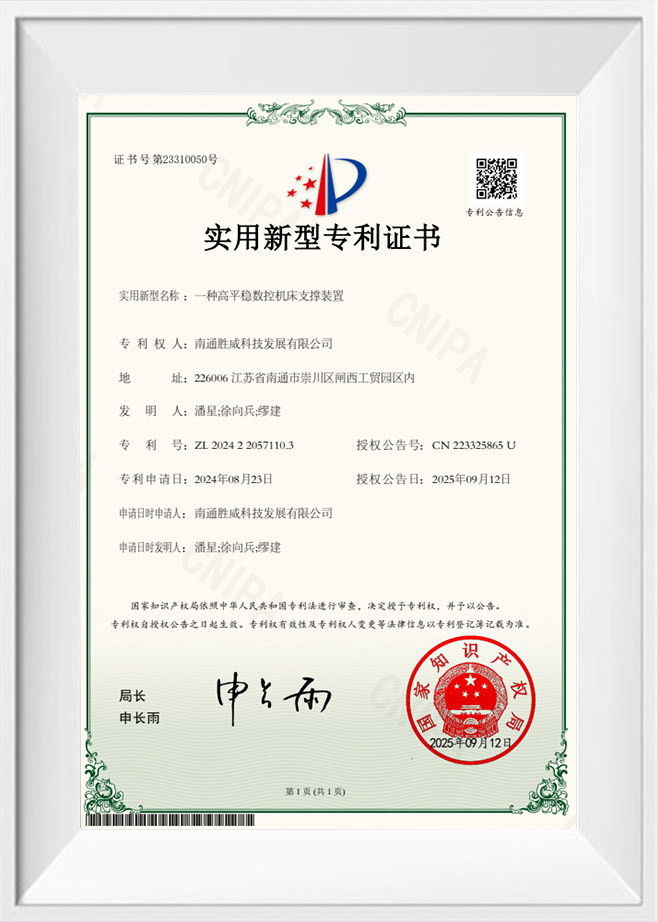
  • Utility Model Patent Certificate
News
Advanced EDM Systems for Aerospace Superhard Alloys Industry Knowledge
NON-CONTACT MACHINING FOR FLIGHT HARDWARE

Advanced EDM Systems Built for Superhard Aerospace Alloys

Our Advanced EDM Systems for Aerospace Superhard Alloys Manufacturers line is engineered and assembled in Nantong, Jiangsu, by Nantong Sunway Science and Technology Development Co., Ltd. It removes metal by spark erosion and electrochemical dissolution instead of shearing, so nickel-base superalloys, titanium alloys, hardened tool steels, cemented carbide and cobalt-chrome present a process question rather than a tool-life problem.

The family pairs CNC multi-axis EDM small-hole drilling with electrochemical machining, which lets a blade, disk, combustor liner or fuel nozzle move from hole popping to cavity shaping and final contouring inside one process chain. Thin walls and diffuser geometries keep their shape because no cutting force is applied at the workpiece.

0.2–3.0 mmMicrohole range on our multi-axis EDM drilling machine
Beyond 1:160Depth-to-diameter ratio in small-hole drilling
Zero cutting forceNo mechanical load on thin walls or finished surfaces

The Two Systems in the Aerospace Range

Each machine answers a different part feature. We configure them together when a job needs both deep cooling holes and shaped cavities.

CNC Multi-axis EDM Drilling Machine

Multi-axis CNC positioning drives a tubular electrode into complex-angle positions, producing film-cooling arrays, nozzle orifices and instrumentation holes in hardened and carbide-bearing parts.

    <listyle='margin-bottom:4px;'></listyle='margin-bottom:4px;'>
  • Hole diameters from 0.2 mm to 3.0 mm
  • Depth-to-diameter ratios beyond 1:160
  • Suited to hardened steels, cemented carbide and superalloys

CNC Multi-axis EDM Drilling Machine Suppliers

Electrochemical Machining (ECM) Machine

Electrochemical dissolution shapes blade cavities, non-standard holes and irregular contours without tool wear, which keeps the electrode geometry stable across a batch.

  • Batch production of complex, high-precision components
  • Excellent surface quality with no recast layer
  • Blade pockets, diffusers and shaped cooling passages

Electrochemical Machining (ECM) Machine Suppliers

Supporting Die-Sinking and Wire EDM

Aerospace work starts at the tool room. Our single-axis and 3-axis CNC EDM forming machines and slow wire EDM range produce the electrodes, fixtures and die inserts that feed the drilling and ECM cells.

Electrical Discharge Machining Manufacturers

Material Fit: What These Systems Are Built to Cut

Machinability by conventional milling or drilling drops sharply as hardness and work-hardening rise. The chart shows how strongly each aerospace material group favours a non-contact process; the values are a qualitative application orientation, not a machine rating.

Titanium alloys
Nickel superalloys
Cobalt-chrome
Cemented carbide
Hardened tool steel
Aluminium alloys
Depth-to-diameter reach by method
Twist drill 4:1Gun drill 50:1EDM >160:1
Bar heights use a compressed scale; the EDM figure is our multi-axis drilling machine capability.
Microhole diameter coverage on the EDM drilling machine
0.2 mm0.8 mm1.8 mm3.0 mm

Critical Specifications and What Each One Sets

The same electrode, dielectric and pulse strategy does not transfer from a 0.3 mm nozzle hole to a 2.5 mm blade row. Specification meaning is fixed during configuration, against the part drawing.

Table: Aerospace EDM and ECM specification meanings used during configuration and acceptance.
Specification What it controls Confirmed at configuration
Hole diameter Electrode tube size, flushing pressure, pulse energy 0.2–3.0 mm coverage on the drilling machine
Depth-to-diameter ratio Electrode length, runout, retract and flushing cycles Beyond 1:160 with controlled retraction
CNC axis count Entry angle to blade rows, nozzle walls and shrouds Multi-axis interpolation agreed per part family
Positioning and repeatability Hole position tolerance and wall-thickness margins Verified through geometry checks and test cuts
Surface integrity Recast layer, heat-affected zone, microcracking Pulse and dielectric strategy set per alloy
Control platform Programming, data handling, line interface 64-bit CPU with industrial PLC; Mitsubishi, SIEMENS, LNCSYNTEC or Weihong
Dielectric and electrolyte Hole straightness, taper, electrode life, surface quality Filtration, pressure and fluid type specified per job
Fixturing and datum scheme Thin-wall distortion and repeat set-up between parts Fixture concept reviewed against the drawing

Controls, Automation and Line Integration

Our machines run on a 64-bit central processing unit with an industrial-grade PLC platform, and the operating system is selected around the plant standard rather than the other way round. That keeps part programs, post-processors and operator habits intact after installation.

MitsubishiSIEMENSLNCSYNTECWeihongCAD/CAM data inputRemote or on-site debugging
Tier 1 — Standalone cellSingle machine, manual load, dedicated electrode set, local program storage.
Tier 2 — Automated electrode handlingTool changers, in-process probing and parameter sets recalled by part number.
Tier 3 — Line-level integrationMulti-machine scheduling, process data export and production reporting to the shop system.

The scope is fixed in the technical agreement, so the delivered machine matches the automation level the cell will actually run at.

Quality Control and Acceptance Before Shipment

Our quality inspection team covers incoming material inspection, process monitoring and final machine testing. Structural parts come from our own foundry and structural-part factory of roughly 10,000 m², guideways are hand-scraped and lapped, spindles are tested under load, and axis precision is calibrated in a real machining environment.

Build-stage checks

  • Incoming inspection of castings, guideways and control hardware
  • Process monitoring through machining and assembly
  • Load testing and axis calibration before final assembly

Shipment acceptance

  • Final machine testing against internal and international standards
  • Test cuts on representative alloy and hole geometry
  • Measurement records released with the machine documentation

Installation, Utilities and Operator Safety

Commissioning runs through a fixed sequence, and the site requirements are agreed before the machine leaves Nantong.

Site and utilities
  • Level foundation and anti-vibration isolation for microhole work
  • Stable power supply and grounding for the pulse generator and PLC
  • Dielectric supply, filtration loop and mist extraction
  • Deionized water, electrolyte handling and effluent treatment for ECM
Safety and operation
  • No cutting force, so thin-wall and finished parts are not clamped under load
  • Guarding and interlocks around the work tank and electrode changer
  • Electrolyte and dielectric handling procedures for operators
  • Operator and maintenance training on site or by remote session

Information We Use to Configure Your Solution

Send these and our engineers can size the machine, electrode strategy and acceptance plan.
Part drawing with datum scheme, GD&T and wall-thickness limits
Alloy designation and condition: solution-treated, aged, hardened or carbide grade
Hole schedule: diameter, depth, entry angle, count and pitch per part
Tolerance, surface finish and inspection method agreed with your quality team
Batch size, cycle target and number of set-ups per shift
Preferred controller, CAM software and existing line interface
Available floor space, power, dielectric and compressed-air capacity
Sample parts or test coupons for trial machining before the order is fixed

Frequently Asked Questions

Can these systems machine Inconel and titanium without cracking the part?Yes, that is the design intent. EDM and ECM remove material thermally or electrochemically with no cutting force, so work-hardened surfaces, thin walls and diffuser geometries are not deformed by tool pressure. Pulse settings and dielectric strategy are set per alloy to control recast and the heat-affected zone.
What hole sizes can your multi-axis EDM drilling machine produce?Hole diameters run from 0.2 mm to 3.0 mm, with depth-to-diameter ratios beyond 1:160 on suitable electrode and flushing setups. Multi-axis CNC positioning reaches angled and compound features such as turbine blade cooling holes.
When is ECM the better choice than EDM?ECM suits shaped cavities and non-standard holes produced in batch, such as blade pockets and irregular passages, because dissolution removes material across the whole profile at once and the electrode does not wear. EDM drilling remains the choice for deep, small-diameter holes where a single tubular electrode defines the feature.
How is the machine accepted before shipment?Final machine testing follows our internal standards and applicable international regulations, carried out by our quality inspection team. Geometry, axis calibration, test cuts on the agreed alloy and measurement records are reviewed with your project team, and sample parts can be produced before the order is confirmed.
What support continues after installation?We provide on-site or remote installation guidance, operator and maintenance training, trial-production debugging, original spare parts with quick response, planned maintenance schedules and re-training for new operators. Application engineers also assist with tool-path and electrode strategy on mainstream CAM software.