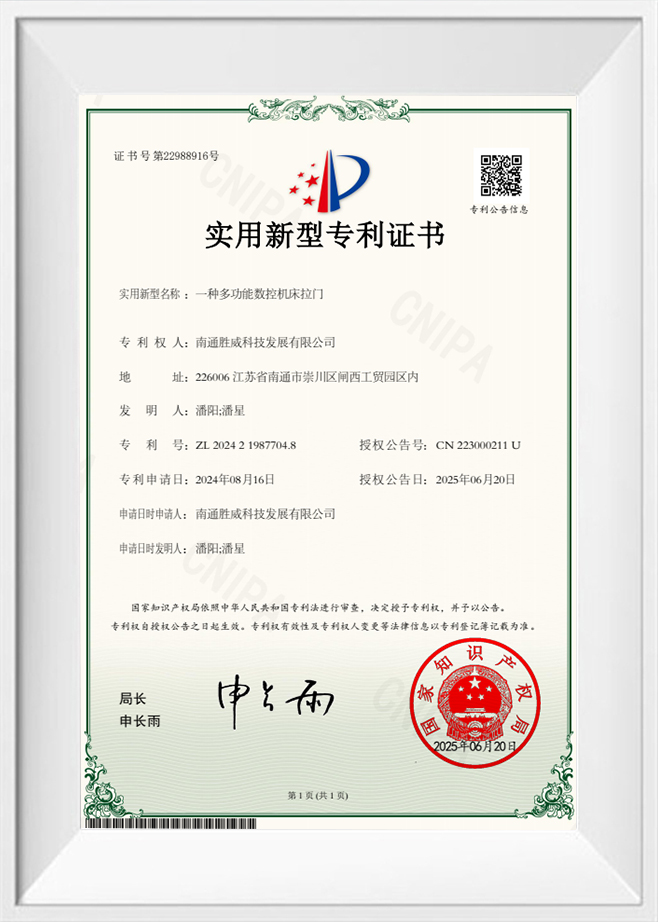
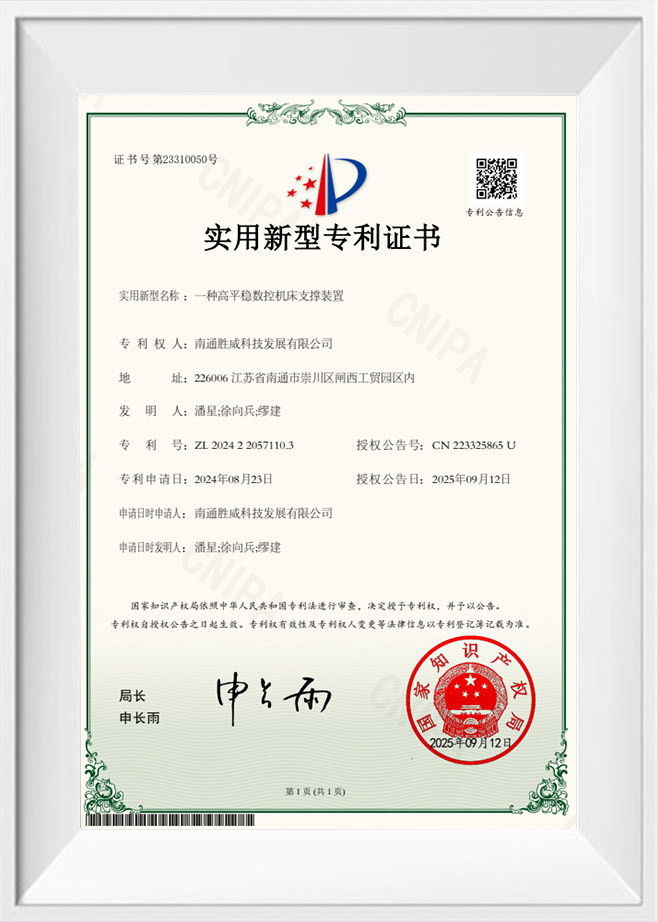
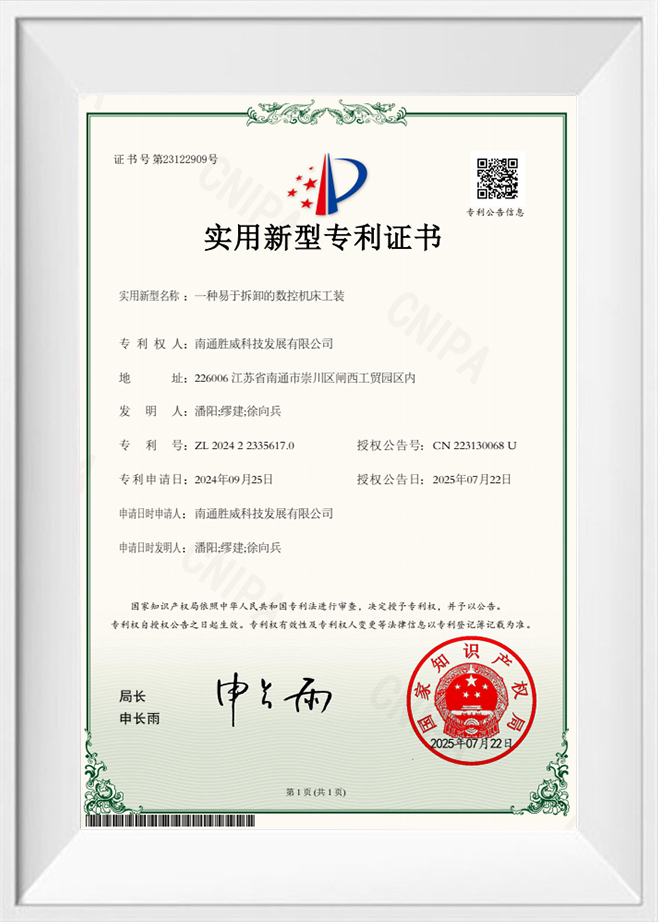
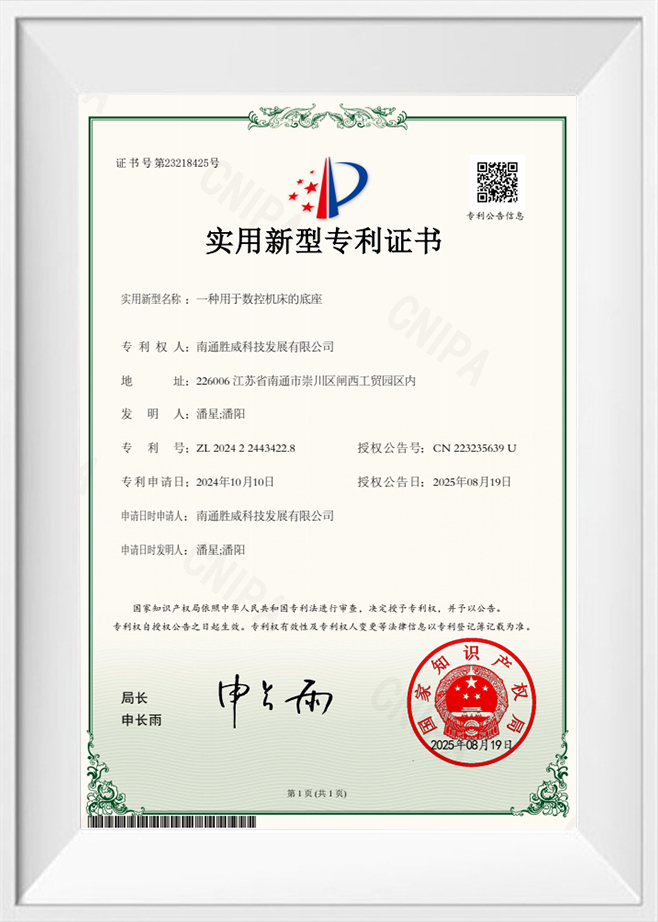
The single-axis EDM machine is an EDM equipment designed for precision molds, complex cavities, and high-hardness material processing. It uses a single-axis CNC system to achieve precise and stable EDM, and is suitable for fine forming, micro-hole processing, and surface treatment of hard-to-cut materials such as hardened steel and cemented carbide. The equipment has a compact structure, convenient operation, high processing efficiency, and excellent surface finish. It is widely used in mold manufacturing, precision machinery, medical equipment, electronic components, and other industries, and is a reliable choice for improving high-precision processing capabilities.
About
Nantong Sunway Science and Technology Development Co., Ltd.
As a China Single Axis CNC EDM Machine Manufacturers and Single Axis CNC EDM Machine Company, Nantong Sunway Science and Technology Development Co., Ltd. is a comprehensive enterprise specializing in the R&D, manufacturing, and sales of numerical control equipment. Located in Nantong, Jiangsu Province, it enjoys convenient transportation and mature industrial supporting facilities. The company's main products include multiple series such as CNC machining centers, EDM forming machines, high-speed engraving and milling machines, small gantry milling machines, CNC EDM machines, and frame milling and engraving machines, which are widely used in mold manufacturing, precision parts processing, hardware, auto parts, electronics, aerospace, and other industries.
Since its establishment, Sunway has continuously increased investment in basic manufacturing and technical equipment. It has built a high-standard foundry and a large structural part processing factory covering an area of approximately 10000 square meters, and introduced multiple advanced guideway grinders and precision processing equipment, forming independent processing and assembly capabilities from structural parts to complete machines.
Sunway has always adhered to the business philosophy of "being honest, pursuing excellent quality, working diligently, and developing through innovation". It attaches great importance to the ex-factory quality of each piece of equipment, strictly implements the testing process, and strives to deliver each product with stability and reliability. With stable performance and good service, Sunway products have not only won customer praise in China but also been exported to Europe, America, Southeast Asia, and other regions.
We believe that high-quality products stem from down-to-earth accumulation. In the future, Sunway will continue to invest in process optimization, intelligent control, customer customization, and other directions, and strive to become your trustworthy machinery and equipment manufacturing partner for a long time.
In manufacturing, CMM stands for coordinate measuring machine. It is a metrology system that measures a real part in three dimensions and compares the result w...
What a Tapping Drill Actually Is
A tapping drill is the drill bit that opens the hole a tap will later cut into a thread. Its diameter is deliberately smaller ...
An endmill is a rotating cutting tool that removes material with cutting edges on both its cylindrical side and its tip. It is gripped in the spindle through a...
Direct answer first: to deburr means to remove the burr, the thin ridge of deformed metal that clings to an edge after cutting, drilling, milling, punching, or...
A die insert arrives on the inspection bench. The drawing specifies the bottom face as datum A, the rear face as datum B, and the left face as datum C. Every p...
Single-Axis CNC EDM Machines Built for Precision Molds and Hard Materials
Nantong Sunway Science and Technology Development Co., Ltd. manufactures single-axis CNC EDM machines for mold shops, precision component plants and tool rooms that need controlled spark erosion on hardened steel, cemented carbide and other conductive hard materials. Our range is produced at our Nantong facility, where we manage casting, structural part machining, assembly and final testing in-house.
A single-axis CNC architecture delivers precise, stable servo control along the Z axis while keeping the machine structure compact and the operator interface straightforward. We configure each machine around the workpiece envelope, electrode strategy, surface finish target and the level of automation required on your line.
Precision Mold Cavities
Fine forming of injection molds, stamping dies and die-casting inserts where sharp corners and deep ribs demand controlled discharge energy.
Micro-Hole and Slot Work
Small-diameter electrodes and controlled single-axis feed suit micro-holes, narrow slots and fine surface texturing in hardened tool steel.
Hard-to-Cut Alloys
Carbide, powder metallurgy steels and heat-treated alloys that resist milling or turning can be eroded without mechanical cutting forces.
How the Single-Axis Platform Fits Your Process
The machine removes material through repeated electrical discharges between a shaped electrode and the workpiece in a dielectric bath. Servo control on a single axis maintains the spark gap as the electrode advances; this simplifies the motion system while keeping the setting accuracy that fine mold work requires.
Our controls combine a 64-bit central processing unit with an industrial-grade PLC platform, and we program discharge parameters such as peak current, pulse-on time and pulse-off time to balance metal removal rate against surface roughness. The graphical data below illustrates typical qualitative trade-offs; exact values depend on material, electrode size and flushing conditions.
Discharge energy setting versus expected surface roughness; final values are confirmed during trial erosion.
Specification Meaning for a Single-Axis EDM
Each specification below directly affects electrode preparation, part loading and the erosion cycle time. We confirm all critical values against your drawing before finalizing the configuration.
Worktable size and load capacity — determines maximum workpiece footprint and weight the machine can support during erosion.
X/Y travel and Z-axis servo stroke — define the working envelope and the available electrode feed length.
Dielectric tank dimensions and filtration — affect flushing efficiency and the volume of workpieces that can be submerged.
Pulse generator and control platform — set the achievable removal rate, surface roughness band and programming flexibility.
Positioning accuracy and repeatability — govern feature location on multi-cavity molds and electrode-to-workpiece alignment.
Configuration Choices We Build Around Your Parts
Control System
Mitsubishi, SIEMENS, LNCSYNTEC and Weihong control platforms are available; we select and parameterize the system to match your existing CAM output and operator familiarity.
Electrode and Fixture Interface
Standard and custom electrode holders, reference tables and clamping arrangements are specified from your electrode drawing and workpiece weight.
Dielectric and Flushing Circuit
Tank capacity, filtration grade and flushing pressure are matched to the electrode geometry so that debris evacuation does not limit removal rate.
Automation Options
Tool changers and part handling interfaces can be discussed for higher-volume mold shops; we confirm compatibility with the selected control platform during review.
Where Our EDM Range Supports Different Jobs
Sunway manufactures a wider EDM family alongside this single-axis platform, so we can match the machine architecture to the geometry rather than force every job onto one configuration. Our 3 Axis CNC EDM Machine line adds multi-axis motion for complex cavities, while the CNC Multi-Axis EDM Small Hole Machine targets cooling holes and deep micro-features.
Application fit across our EDM and machining range for mold, hole and hard-material work.
Machine Type
Typical Workpiece
Motion Architecture
Best Fit
Single Axis CNC EDM
Mold inserts, fine cavities, micro-holes
Z-axis servo feed
Precision forming with compact footprint
3 Axis CNC EDM
Complex three-dimensional cavities
X, Y, Z interpolation
Multi-surface mold work and orbital erosion
Multi-Axis Small Hole EDM
Cooling holes, fuel nozzles, deep micro-holes
Multi-axis drilling head
Aerospace and medical small-hole production
Slow Wire EDM
Through profiles, punches, die plates
Wire path with multi-pass trim
2D contour accuracy and fine surface finish
Installation, Utilities and Operator Safety
A single-axis EDM needs a stable power supply, a clean dielectric circuit and adequate floor space for tank access and electrode handling. We prepare a site layout with utility connection points before shipment and review the foundation requirements against the machine mass and worktable load.
Electrical supply: voltage and phase confirmed against the control platform selected for your order.
Dielectric fluid: tank fill volume, filtration grade and fluid type specified from the erosion process and workpiece material.
Operator protection: interlocked tank access, insulated electrode holders and emergency stop circuits are part of the standard electrical build; final safety features follow the machine configuration.
Commissioning: our technical team assists with parameter calibration and trial erosion, either on site or by remote guidance, so the first production parts meet the drawing.
Quality Control from Casting to Final Test
We build the structural parts and manage assembly in our own Nantong facility. Guideway scraping and lapping are done manually, spindles and axis motions are checked under load, and each machine is calibrated in a machining environment before shipment. A dedicated inspection team handles incoming material inspection, process monitoring and final machine testing.
01Incoming material check02Process monitoring03Axis calibration04Final machine test
Information We Use to Configure Your Solution
A workable proposal starts from the part, not the catalogue. We ask for the following details so that the machine envelope, control platform and tooling match the work you need to erode.
Part Drawing
Cavity geometry, corner radii, depth and tolerance stack-up.
Workpiece Material
Hardened steel grade, hardness, carbide type or other conductive material.
Surface and Accuracy Target
Required Ra range, feature position tolerance and electrode wear allowance.
Production Context
Batch size, shift pattern, floor space, available power and automation plans.
Send these details with your enquiry and our application team will match the worktable size, Z-axis servo, pulse generator and control platform to the job, then return a configuration drawing and quotation.
Documentation, Training and Service Support
Every machine ships with an operation manual and electrical drawings covering the selected control platform. We provide basic training for operators and maintenance personnel covering electrode installation, parameter setting, program debugging and daily inspection. Remote video troubleshooting and original spare parts are available through our after-sales team, and we can help plan a maintenance schedule around your production calendar.
As a Single Axis CNC EDM Machine Suppliers based in Jiangsu, we supply machines to mold shops, component plants and distributors, and we support each order from casting through commissioning. For the broader machining range that surrounds the EDM cell, see our CNC Machining Equipment Suppliers overview.
Frequently Asked Questions
What is the difference between a single-axis CNC EDM and a 3-axis machine?
A single-axis machine controls electrode feed along the Z axis, which suits precision forming where the cavity is reached from one direction. A 3-axis EDM adds programmed X and Y motion, allowing orbital erosion and multi-surface cavities. We manufacture both and can advise on the architecture that fits your geometry.
Which materials can be processed on our single-axis EDM?
The process applies to any electrically conductive material, including hardened tool steel, cemented carbide, powder metallurgy steels and heat-resistant alloys. Non-conductive ceramics and plastics are outside the scope of spark erosion.
Can the control system be matched to our existing CAM workflow?
Our machines support Mitsubishi, SIEMENS, LNCSYNTEC and Weihong control platforms. We confirm the preferred system at order stage and configure the post-processor and programming interface so that electrode paths generated in your CAM environment can be transferred to the machine.
What support is included during installation and ramp-up?
Our technical team assists with installation guidance, parameter calibration and trial erosion so that the first parts meet the drawing. Operator training covers electrode setup, program debugging, daily inspection and troubleshooting. Remote video support and original spare parts remain available after commissioning.
What information should be included in an initial enquiry?
Provide the part drawing, workpiece material and hardness, required surface roughness and feature tolerance, maximum workpiece size and weight, batch size and available floor space. With these we can propose a worktable size, servo stroke, pulse generator setting and control platform without repeated clarification.


 русский
 Español