


 русский
 Español
Heat treatment is a controlled thermal process that changes the mechanical properties of metal by heating it to a specific temperature, holding it there, and then cooling it at a rate chosen to produce a desired internal structur...
READ MORE
What Does Machining Mean? CNC Gantry Milling Explained
Content
- 1 What Does Machining Mean? The Direct Answer
- 2 The Core Machining Operations Explained
- 3 How CNC Changed What Machining Means in Practice
- 4 CNC Gantry Milling Machine: Architecture and Capabilities
- 5 What Materials Can Be Machined
- 6 Tolerances and Surface Finish: What Machining Can Actually Achieve
- 7 Industries That Rely on Machining and Gantry Milling
- 8 Machining vs. Other Manufacturing Processes
- 9 Setting Up and Programming a CNC Gantry Milling Machine
- 10 How to Select the Right CNC Gantry Milling Machine for a Workshop
- 11 Key Machining Terms Every Buyer Should Know
- 12 Quality Control in Machining Operations
- 13 Where Machining Technology Is Heading
What Does Machining Mean? The Direct Answer
Machining is a subtractive manufacturing process in which material — most commonly metal — is precisely removed from a workpiece using cutting tools and controlled mechanical force, leaving behind a finished part that matches an exact geometric specification. The raw block of material starts larger than the final part; machining removes everything that does not belong.
In industrial practice, machining covers a broad family of operations: turning, milling, drilling, boring, grinding, broaching, and more. Each operation uses a different tool motion or workpiece motion to achieve a specific cut. What unites them is precision — modern CNC machining routinely holds dimensional tolerances of ±0.01 mm or tighter, something impossible to achieve consistently by hand.
The word itself comes from the Latin machina, meaning device or structure. In manufacturing, it evolved to describe any powered, tool-guided removal of material. Today, when engineers say "machining," they almost always mean computer-controlled cutting — and the CNC Gantry Milling Machine has become one of the most capable platforms in that category, handling workpieces that smaller machines cannot reach.
The Core Machining Operations Explained
Understanding what machining means requires understanding the individual operations that fall under that umbrella. Each one removes material differently and suits different part geometries.
Turning
The workpiece rotates while a stationary cutting tool moves along the surface. This produces cylindrical shapes — shafts, pins, bushings, and threaded fasteners. A CNC lathe can achieve surface finishes below Ra 0.8 µm in a single pass on steel.
Milling
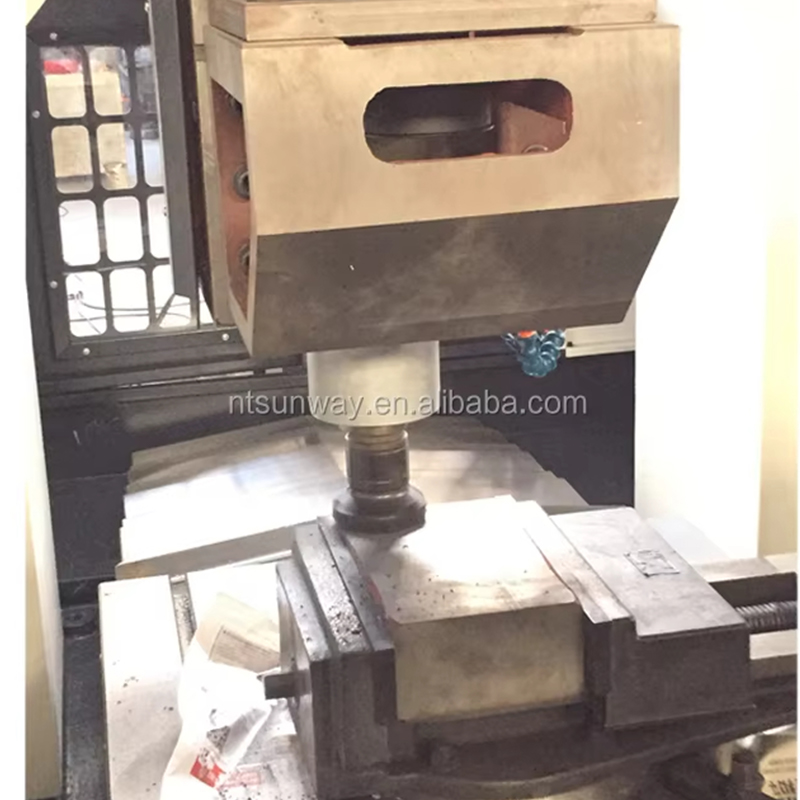
The cutting tool rotates while the workpiece moves along one or more linear axes. Milling creates flat surfaces, slots, pockets, contours, and complex 3D profiles. It is the most versatile of all machining operations, and the CNC gantry milling machine represents its most powerful configuration for large-format work.
Drilling and Boring
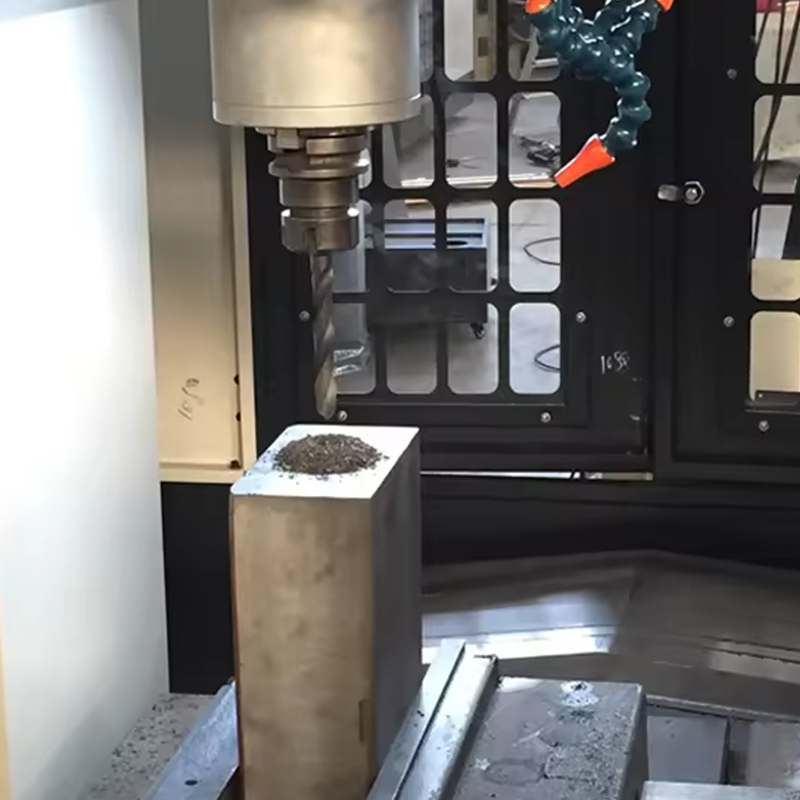
Drilling creates holes using a rotating, pointed bit. Boring enlarges and precisely finishes existing holes using a single-point tool. Together they handle the majority of hole-making tasks in structural and mechanical components.
Grinding
An abrasive wheel removes extremely fine amounts of material, achieving surface roughness values below Ra 0.2 µm and tolerances under ±0.005 mm. Grinding typically follows milling or turning as a finishing step for hardened parts.
Broaching
A multi-tooth tool is pushed or pulled through a workpiece in a single stroke, cutting a precise profile — keyways, splines, and internal gear teeth are classic broaching applications. Though less common than milling, it is highly efficient for high-volume production of complex internal shapes.
How CNC Changed What Machining Means in Practice
Before computer numerical control (CNC), machining was a skilled-trade craft. A machinist read a blueprint, set up the machine by hand, and guided cuts manually using handwheels and feel. Part-to-part consistency depended entirely on individual skill.
CNC replaced handwheels with servo motors driven by G-code programs. The machine executes the same toolpath identically on every part, whether it is the first piece or the ten-thousandth. This shift had three major effects on what machining means for industry:
- Tolerances that once required master craftsmen became routine production targets achievable by operators following standardized setups.
- Complex curved and contoured surfaces — once requiring jigs, templates, and specialized form tools — became programmable 3D toolpaths executed on 5-axis machining centers.
- Machine utilization climbed dramatically. Lights-out machining — running overnight with no operator present — is standard practice in high-volume shops.
The CNC Gantry Milling Machine extended these gains to workpieces measured in meters rather than millimeters. A gantry configuration places the X-axis bridge on two vertical columns that straddle the worktable, allowing the spindle to travel over parts that a conventional column-and-knee milling machine could never reach. Aerospace structural frames, ship propeller hubs, large mold bases, and heavy machinery beds are typical workpieces.
CNC Gantry Milling Machine: Architecture and Capabilities
The CNC gantry milling machine is purpose-built for large, heavy workpieces where travel distances, cutting forces, and structural rigidity requirements exceed what bridge mills or vertical machining centers can provide.
Structural Layout
Two robust vertical columns, anchored to a massive base casting, support a horizontal crossrail (the gantry beam). The milling head travels along the crossrail in the Y-axis direction, while the worktable or the gantry itself provides X-axis travel. Z-axis movement raises and lowers the spindle. High-end models add A and B rotational axes to the spindle head, creating a 5-axis CNC gantry milling machine capable of machining undercuts and compound angles in a single setup.
Typical Working Dimensions
| Machine Class | X Travel | Y Travel | Z Travel | Table Load Capacity |
|---|---|---|---|---|
| Medium gantry | 3,000 – 6,000 mm | 2,000 – 3,500 mm | 800 – 1,200 mm | 10 – 30 t |
| Large gantry | 6,000 – 15,000 mm | 3,500 – 6,000 mm | 1,200 – 2,000 mm | 30 – 100 t |
| Extra-large / rail gantry | 15,000 mm+ | 6,000 mm+ | 2,000 mm+ | 100 t+ |
Spindle Power and Speed
Gantry milling spindles are selected based on material and process. Heavy roughing of steel and cast iron uses high-torque spindles — often 37 kW to 75 kW — running at relatively low speeds to maintain cutting force. Aluminum aerospace profiling uses high-speed spindles running at 12,000 to 24,000 RPM with lower torque, prioritizing material removal rate through feedrate rather than force.
Guideway Systems
Linear roller guideways provide low friction and high positioning accuracy but are less suited to heavy interrupted cuts. Box-way (slideway) guideways offer far greater damping and resistance to cutting forces, making them the traditional choice on heavy-duty gantry machines. Many modern large gantry mills combine box-ways on the X-axis (where cutting forces are highest) with linear guideways on Y and Z for speed.
What Materials Can Be Machined
The term machining applies to a wide range of workpiece materials. The material determines tool selection, cutting parameters, and which machining process is appropriate.
- Carbon and alloy steels: The most commonly machined metals. Machinability varies widely — low-carbon free-machining steels like 12L14 cut easily, while high-alloy tool steels in hardened condition require carbide or ceramic tooling and slow feeds.
- Stainless steels: Work-harden rapidly during cutting, generating high heat. Sharp tooling, positive rake angles, and generous coolant flow are essential.
- Aluminum alloys: Machine at high speed with excellent surface finish. The 6000 and 7000 series alloys dominate aerospace structural machining, where a CNC gantry milling machine removes up to 80–95% of the original billet weight to produce thin-walled structural frames.
- Titanium alloys: Low thermal conductivity traps heat at the cutting edge. Cutting speeds are kept well below those used for steel — typically 40 to 80 m/min — and toolpaths are designed to keep the tool constantly engaged rather than air-cutting to avoid thermal shock.
- Cast iron: Machines cleanly and produces powder-like chips rather than long stringy swarf. Widely used for machine tool beds, engine blocks, and brake components.
- Plastics and composites: Machinable but require different tooling geometry — sharp edges, low rake angles for some polymers, and diamond-coated tools for carbon fiber reinforced plastics (CFRP) to manage abrasive wear.
Tolerances and Surface Finish: What Machining Can Actually Achieve
One of the defining characteristics of machining — and the reason it remains indispensable despite advances in additive manufacturing — is the precision it delivers on demand. The following table summarizes what different machining processes typically achieve:
| Process | Dimensional Tolerance (typical) | Surface Roughness Ra | Best Application |
|---|---|---|---|
| CNC Milling (roughing) | ±0.05 – ±0.1 mm | 3.2 – 12.5 µm | Stock removal, near-net shape |
| CNC Milling (finishing) | ±0.01 – ±0.02 mm | 0.8 – 3.2 µm | Functional surfaces, mating faces |
| CNC Turning | ±0.005 – ±0.02 mm | 0.8 – 3.2 µm | Cylindrical features, shafts |
| Grinding | ±0.002 – ±0.005 mm | 0.1 – 0.8 µm | Hardened parts, bearing seats |
| Honing | ±0.001 – ±0.003 mm | 0.05 – 0.4 µm | Cylinder bores, hydraulic sleeves |
For large structural components machined on a CNC gantry milling machine, positional accuracy across the full worktable length is a critical specification. High-precision gantry machines achieve positional accuracy of ±0.01 mm over 6,000 mm of travel, verified using laser interferometry during acceptance testing.
Industries That Rely on Machining and Gantry Milling
Machining is not confined to a single sector. Its combination of precision, repeatability, and material range makes it foundational across manufacturing.
Aerospace and Defense
Aerospace structural components — fuselage frames, wing spars, bulkheads, and landing gear housings — require the travel lengths and rigidity of a gantry configuration. Aluminum 7075-T651 wing spar sections can measure over 10 meters in length and require material removal rates that smaller machines cannot sustain economically. Tight tolerances of ±0.015 mm on critical hole locations are common requirements on aerospace structural drawings.
Energy and Power Generation
Wind turbine main shafts, turbine blade root fixtures, and generator housings are typical gantry milling targets. Steam turbine casings cast from alloy steel can weigh over 50 tonnes and require facing, boring, and profiling operations that take multiple days of continuous machining to complete.
Shipbuilding and Marine
Propeller shaft brackets, rudder stocks, and diesel engine bedplates are machined on large gantry platforms. Marine propeller blades for large container ships can exceed 3 meters in diameter, with blade surface profiles held to ±0.3 mm to ensure hydrodynamic efficiency.
Heavy Equipment and Industrial Machinery
Mining equipment frames, hydraulic press columns, and roll housings for steel mills require the high load capacity and rigidity of gantry milling. A typical roll housing for a cold rolling mill can weigh 80 tonnes and require bearing bore accuracies of ±0.02 mm.
Mold and Die Manufacturing
Injection mold bases, die casting tooling, and large stamping dies are routinely machined on CNC gantry milling machines. Die steel blocks measuring 2,000 mm × 1,500 mm × 800 mm are standard workpieces. High-speed finishing passes create cavity surfaces with Ra values below 0.4 µm that require minimal hand polishing.
Machining vs. Other Manufacturing Processes
Understanding what machining means is clearer when contrasted against the other major ways of shaping material.
| Process | Material Removed? | Precision | Typical Tolerance | Best For |
|---|---|---|---|---|
| Machining (milling, turning) | Yes — subtractive | Very high | ±0.005 – ±0.05 mm | Precision parts, complex geometry |
| Casting | No — formative | Low to medium | ±0.5 – ±3 mm | Complex internal shapes, high volume |
| Forging | No — formative | Low to medium | ±0.5 – ±2 mm | High-strength structural parts |
| 3D Printing (metal) | No — additive | Medium | ±0.1 – ±0.5 mm | Complex internal lattice, prototypes |
| Sheet metal forming | Partial — blanking | Medium | ±0.1 – ±0.5 mm | Enclosures, brackets, thin panels |
In practice, many heavy industrial parts begin as castings or forgings and are then machined to final dimensions. The casting or forging provides the approximate shape and material properties; machining delivers the precision that the application demands. A CNC gantry milling machine is often the equipment that bridges the gap between a rough 20-tonne casting and a finished machine component ready for assembly.
Setting Up and Programming a CNC Gantry Milling Machine
The actual machining process on a large gantry mill involves considerably more preparation than running a small vertical machining center. The scale of the workpiece, the cycle times measured in days rather than minutes, and the cost of raw material errors all demand careful process planning.
Workpiece Fixturing
A 30-tonne steel casting cannot be held in a vise. Large gantry work relies on T-slot worktables where the part is clamped directly using T-bolts, step blocks, and strap clamps. Modular fixturing systems allow complex workpieces to be located repeatedly to within 0.02 mm, essential for multi-operation machining sequences. For particularly large or irregular workpieces, custom fabricated fixtures are welded from structural steel and stress-relieved before use.
CAD/CAM Programming
Modern CNC gantry milling programs originate in CAM software — commonly Siemens NX, Mastercam, or Hypermill for large-format complex parts. The programmer imports the 3D CAD model, defines machining operations, selects tooling from a library, specifies feeds and speeds, and simulates the toolpath to check for collisions and gouges before sending code to the machine. On a complex aerospace component, CAM programming can take two to four weeks before a single chip is cut.
On-Machine Probing
Large parts cannot be removed and taken to a coordinate measuring machine (CMM) after each operation. Instead, touch-trigger probing cycles run directly on the CNC gantry milling machine to verify dimensions in-process. Probing confirms that the part has been correctly located, that critical features are within tolerance before moving to the next operation, and that tool wear has not caused dimensional drift. This in-process verification significantly reduces the risk of scrapping a workpiece that may have taken weeks to rough machine.
Coolant and Chip Management
Heavy milling of steel generates large volumes of metal chips and requires continuous coolant flow — flood coolant at 100–400 L/min is typical, sometimes supplemented by high-pressure through-spindle coolant at 70 bar for deep-hole operations. Chip conveyors running beneath the worktable remove swarf automatically. Aluminum milling generates lighter but voluminous chips that must be managed carefully to prevent re-cutting, which damages surface finish and tool life.
How to Select the Right CNC Gantry Milling Machine for a Workshop
Choosing a gantry mill is a capital investment that shapes a facility's capacity for years. Several criteria drive the decision.
- Workpiece envelope: The machine must accommodate the longest, widest, and tallest parts planned for production, plus adequate clearance for fixturing and tool access. Buying too small limits the facility permanently; buying excessively large wastes capital and floor space.
- Material and cutting strategy: A facility machining primarily aluminum aerospace structures needs high spindle speeds and rapid traverse rates. A job shop cutting steel weldments and cast iron needs torque, rigidity, and robust chip management. These requirements lead to different machine configurations and spindle specifications.
- Accuracy requirements: Not all gantry milling work demands high precision. A machine building structural steel weldments to ±0.5 mm has very different accuracy requirements from one producing aerospace tooling to ±0.02 mm. Higher accuracy requires hydrostatic or roller guideways, thermally stable structures, and closed-loop measurement systems — all of which add cost.
- Number of axes: A 3-axis gantry mill handles prismatic parts efficiently. A 5-axis CNC gantry milling machine adds a nutating or fork-type A/B spindle head, enabling compound angle cuts and undercut machining without repositioning the workpiece. 5-axis capability reduces setup count dramatically on complex parts but increases machine cost and programming complexity.
- Foundation and installation requirements: Large gantry mills weigh 50 to 300 tonnes or more. They require deep reinforced concrete foundations, sufficient crane capacity for installation and tooling changes, and in many cases precision alignment of the machine to the foundation using grout leveling. These civil and infrastructure costs must be factored into the total project budget.
Key Machining Terms Every Buyer Should Know
When specifying machining work or evaluating a CNC gantry milling machine, familiarity with technical terminology prevents costly miscommunication.
Material Removal Rate (MRR)
Expressed in cm³/min or in³/min, MRR describes how fast a machine removes material. It is calculated from the axial depth of cut, radial width of cut, and table feedrate. A high-power gantry spindle can achieve MRR values above 1,500 cm³/min when roughing aluminum with large-diameter face mills.
Positioning Accuracy vs. Repeatability
Positioning accuracy describes how close the machine reaches a commanded position from any starting point. Repeatability describes how consistently it returns to the same position multiple times. These are different specifications. A machine may have positioning accuracy of ±0.02 mm but repeatability of ±0.005 mm — the latter figure governs in most production scenarios where the same features are cut repeatedly.
Thermal Compensation
Heat from spindle bearings, servo motors, and the cutting process causes thermal growth in machine structures. A 10°C rise in spindle housing temperature can cause 25 to 50 µm of spindle centerline drift on an uncompensated machine. Modern CNC gantry milling machines use temperature sensors throughout the structure and apply real-time compensation values through the control system to counteract this drift.
Backlash
The small gap in a drivetrain that causes the axis to move slightly before the output responds when direction reverses. Ball screws have minimal backlash by design; rack-and-pinion drives on long-travel gantry axes require anti-backlash preload mechanisms. Linear scale feedback systems measure actual table position regardless of drivetrain backlash, providing closed-loop position control independent of mechanical play.
Runout
The total deviation of a rotating element — typically the spindle taper — from its theoretical centerline. Spindle runout directly limits the surface finish and dimensional accuracy achievable. High-precision spindles have total indicated runout (TIR) values below 2 µm.
Quality Control in Machining Operations
Machining precision is only as good as the measurement and verification processes surrounding it. Quality control in a machining context involves several layers of inspection.
In-Process Measurement
As discussed, on-machine probing checks critical dimensions without removing the workpiece. Tool length and diameter measurement probes at the spindle verify that tools are correctly loaded and not broken before a toolpath begins. These checks prevent scrap caused by wrong tools or missing offsets.
Coordinate Measuring Machines
After machining, large structural parts move to a CMM for final inspection. Bridge CMMs for large parts can accommodate workpieces up to 5,000 mm × 3,000 mm, while gantry CMMs handle even larger items. A CMM measures the actual 3D coordinates of hundreds or thousands of points on the machined surfaces, comparing them to the CAD nominal geometry to generate a dimensional inspection report showing every feature with its measured value and deviation from nominal.
Surface Finish Measurement
Contact profilometers traverse the machined surface with a diamond stylus and record the surface profile digitally, calculating Ra, Rz, and other roughness parameters. Non-contact optical profilometers using white light interferometry can measure surface roughness on delicate surfaces without physical contact, achieving resolution below 1 nm.
Where Machining Technology Is Heading
The meaning of machining continues to evolve as machine tool technology advances. Several trends are reshaping what the process can achieve and how it is managed.
Hybrid Machining — Additive Plus Subtractive
Some modern machining centers combine directed energy deposition (DED) additive heads with milling spindles on the same platform. A part can be built up additively to near-net shape, then finish-machined in the same setup. This combination is particularly valuable for large titanium aerospace parts where the buy-to-fly ratio on machined forgings is extremely high.
Intelligent Adaptive Control
Sensor fusion — combining spindle power monitoring, vibration analysis, and acoustic emission sensing — allows modern CNC systems to detect changing cutting conditions in real time and adjust feedrates automatically. This prevents tool breakage, reduces chatter, and maintains consistent surface quality even when workpiece hardness varies. On a gantry mill running a 48-hour continuous machining cycle, adaptive control reduces operator intervention and unplanned downtime.
Digital Twin Integration
A digital twin is a virtual model of the machine and its workpiece, updated in real time from sensor data. Engineers can monitor a machining operation remotely, visualize tool position against the CAD model, and predict when maintenance will be needed based on trend data from spindle vibration sensors and axis motor currents. Digital twin capability is becoming standard on high-end CNC gantry milling machines from major builders.
Automated Loading and Flexible Manufacturing
Even large gantry operations are incorporating automation. Overhead gantry cranes with vision-guided pallet placement, automated workpiece transport systems, and flexible fixture libraries allow some facilities to run multiple different large part types through a gantry milling cell with minimal operator intervention between setups. This extends the economic advantages of CNC machining deeper into low-volume, high-mix production scenarios.
Interested in cooperation or have questions?
News
-
-
An EDM machine, also called an electrical discharge machining machine, uses controlled sparks to erode electrically conductive metal without direct contact between the tool and the workpiece. The workpiece is submerged in a diele...
READ MORE -
Cutting Tools Are Used to Convert Raw Material into Functional Parts Cutting tools are the hardened, wear-resistant elements that shear away unwanted material from a workpiece to create a finished component. They are applied in e...
READ MORE -
A CNC machine can cut, drill, mill, turn, burn, and shape almost any conductive or composite material with an accuracy that manual machines rarely match. The real question is not what a CNC machine can do in theory, but what a sp...
READ MORE
Related Products

-
Factory Address
Zhaxi Township Industrial Park, Nantong City, Jiangsu Province, China (west of Huaneng Power Plant)
-
Phone
+86-13615235768
+86-15950816906
-
Fax
+86-513-85632766
-
Email
pan.director@sunwayer.com
Stay Connected
lf you can't find the answer you're looking for, chat with our friendly team.
Stay Connected
Copyright © Nantong Sunway Science and Technology Development Co., Ltd. All Rights Reserved.
China CNC Equipment Manufacturers
Custom CNC Equipment Factory
