


 русский
 Español
Heat treatment is a controlled thermal process that changes the mechanical properties of metal by heating it to a specific temperature, holding it there, and then cooling it at a rate chosen to produce a desired internal structur...
READ MORE
What Is a CNC Machine? Complete Guide to CNC Equipment
Content
- 1 What Is a CNC Machine? A Complete Answer
- 2 A Brief History of CNC Equipment
- 3 How Does a CNC Machine Actually Work?
- 4 Major Types of CNC Equipment Explained
- 5 Key Components of CNC Equipment
- 6 Understanding CNC Machine Axes
- 7 Materials Processed by CNC Equipment
- 8 CNC Equipment vs. Manual Machining: A Practical Comparison
- 9 Industries That Rely on CNC Equipment
- 10 CNC Programming: G-Code, CAM Software, and Conversational Controls
- 11 Buying CNC Equipment: Key Specifications to Evaluate
- 12 CNC Equipment Maintenance: Keeping Machines Running at Peak Performance
- 13 Smart CNC Equipment and Industry 4.0 Integration
- 14 How Much Does CNC Equipment Cost? A 2025 Price Overview
- 15 CNC Equipment Safety: Essential Practices
- 16 Frequently Asked Questions About CNC Equipment
What Is a CNC Machine? A Complete Answer
A CNC machine — short for Computer Numerical Control machine — is a piece of automated manufacturing equipment that uses pre-programmed computer software to control the movement of cutting tools, spindles, drills, and other mechanical components. The letters "C and C" that many people search for are simply the common spoken shorthand for CNC, referring to the same category of industrial machinery. In practice, CNC equipment encompasses dozens of distinct machine types: milling machines, lathes, routers, grinders, plasma cutters, laser cutters, and waterjet systems, among others.
The core principle is straightforward: instead of an operator manually turning handwheels or levers to guide a cutting tool, a computer interprets a set of coded instructions (called G-code) and drives servo motors with sub-millimeter accuracy. This shift from manual to digital control transformed manufacturing, enabling repeatability tolerances as tight as ±0.001 mm on modern machining centers.
According to Grand View Research, the global CNC machine tool market was valued at approximately USD 86.83 billion in 2023 and is projected to grow at a compound annual growth rate (CAGR) of around 6.8% through 2030, driven by aerospace, automotive, electronics, and medical device manufacturing.
A Brief History of CNC Equipment
1940s
Numerical Control Origins
John T. Parsons and Frank Stulen developed early numerical control concepts at the Massachusetts Institute of Technology (MIT) under a US Air Force contract. Punched cards directed machine movements to produce complex helicopter blade profiles.
1952
First NC Machine
MIT demonstrated the first numerically controlled milling machine. The system read instructions from a punched paper tape, laying the groundwork for all future CNC equipment.
1960s–70s
Computer Integration
Minicomputers replaced dedicated electronic hardware, giving birth to the term "Computer Numerical Control." G-code became the standardized programming language (ISO 6983), still in use today.
1980s–90s
PC-Based Controls and CAD/CAM
Personal computers made CNC accessible to small shops. CAD/CAM software allowed engineers to design a part digitally and automatically generate machine code, slashing programming time from hours to minutes.
2000s–Present
Smart CNC and Industry 4.0
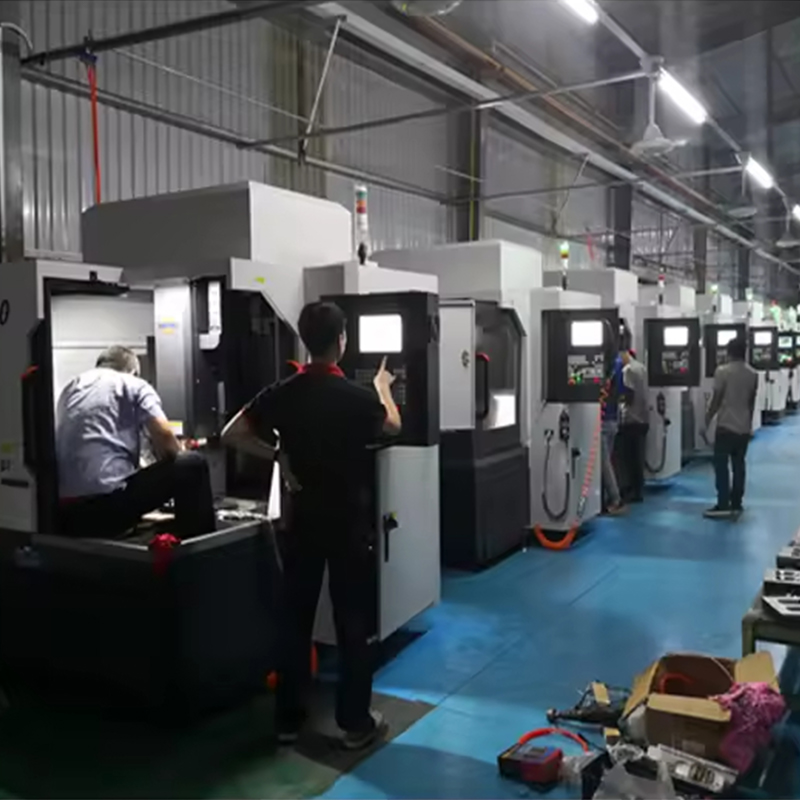
Modern CNC equipment integrates IoT sensors, real-time machine monitoring, predictive maintenance algorithms, and robotic loading systems. Five-axis and multi-spindle machines now produce parts in a single setup that previously required four or five separate operations.
How Does a CNC Machine Actually Work?
Understanding a CNC machine means tracing the journey from digital design to finished part. There are five core stages.
01
CAD Design
An engineer models the part in Computer-Aided Design (CAD) software such as SolidWorks, Fusion 360, or CATIA. The 3D model defines every dimension, surface, and feature.
02
CAM Processing
Computer-Aided Manufacturing (CAM) software takes the CAD model and generates toolpaths — the exact routes the cutting tool will travel. The operator selects tool types, speeds, feeds, and depth of cut.
03
G-Code Generation
CAM outputs G-code, a standardized text-based language. A simple line might read G01 X25.0 Y10.0 F500, meaning "move linearly to coordinate X=25, Y=10 at a feed rate of 500 mm/min."
04
Machine Setup
An operator mounts the raw material (workpiece) in the machine's vise or chuck, installs the required cutting tools in the tool changer, and sets the coordinate origin (datum point).
05
Machining Execution
The controller reads G-code, drives servo or stepper motors along programmed axes, and the cutting tool removes material from the workpiece. Feedback loops from encoders continuously correct position errors in real time.
Major Types of CNC Equipment Explained
Not all CNC equipment works the same way. Each machine type is optimized for specific materials, geometries, and production volumes. Here is a breakdown of the most widely used categories.
CNC Milling Machine
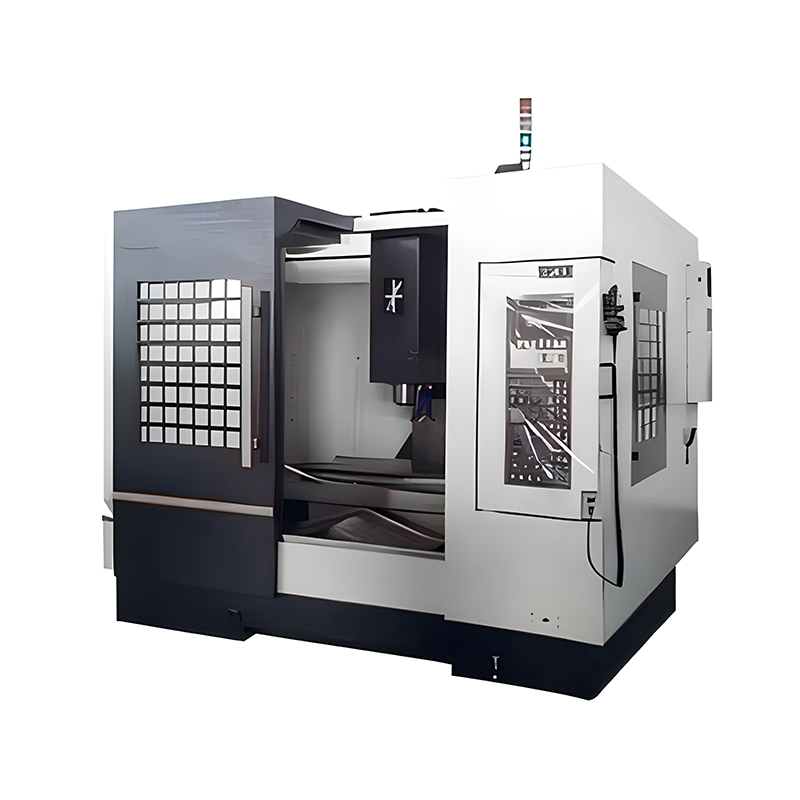
A rotating cutting tool moves across a stationary (or slowly moving) workpiece to remove material. Milling centers handle flat surfaces, pockets, slots, contours, and complex 3D shapes. Three-axis models cover most jobs; five-axis machines tackle undercuts and compound angles without repositioning.
Typical tolerances: ±0.005 mm on precision VMCs (vertical machining centers).
CNC Lathe / Turning Center
The workpiece rotates while a stationary tool removes material to create cylindrical, conical, or threaded profiles. CNC lathes excel at shafts, bushings, nozzles, and fittings. Modern turning centers often include live tooling — rotating milling tools mounted on the turret — enabling milling and drilling without removing the part.
CNC Router
Structurally similar to a milling machine but optimized for softer materials: wood, MDF, plastics, foam, and thin aluminum sheet. CNC routers dominate furniture manufacturing, sign making, and composite panel work. Large-format routers with table sizes up to 2440 × 1220 mm (4 × 8 ft) are standard in cabinet shops.
CNC EDM (Electrical Discharge Machining)
Instead of a cutting tool, EDM uses controlled electrical sparks to erode conductive material. Wire EDM can cut hardened steel to ±0.002 mm accuracy — impossible with conventional tooling. Used heavily in mold making, die production, and aerospace.
CNC Laser Cutter
A high-power laser beam (CO2 or fiber) melts, burns, or vaporizes material along the programmed path. Fiber laser cutters can slice through 25 mm mild steel at high speeds while holding kerf widths under 0.1 mm. No tooling wear, minimal setup time.
CNC Plasma Cutter
A jet of ionized gas (plasma) at temperatures exceeding 20,000°C cuts through electrically conductive metals. CNC plasma tables are cost-effective for cutting steel plate from 3 mm to over 50 mm thick and are common in structural fabrication and heavy equipment manufacturing.
CNC Waterjet Cutter
An ultra-high-pressure water stream (up to 90,000 PSI) mixed with abrasive garnet cuts virtually any material — stone, glass, titanium, carbon fiber — without heat distortion. This makes it ideal for materials sensitive to thermal stress.
CNC Grinding Machine
Abrasive wheels finish surfaces to extremely tight tolerances and low roughness values (Ra < 0.2 µm). CNC surface grinders, cylindrical grinders, and jig grinders are critical in bearing, tool, and gauge manufacturing.
Key Components of CNC Equipment
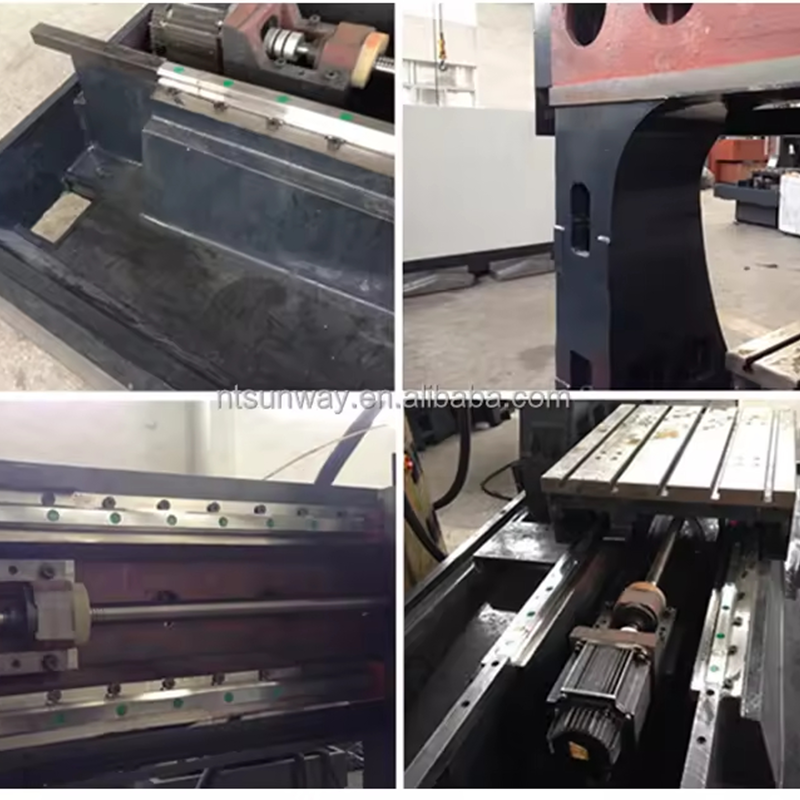
Every CNC machine shares a set of fundamental subsystems. Knowing what each component does helps you evaluate equipment specifications and diagnose performance issues.
| Component | Primary Function | Typical Specification Range |
|---|---|---|
| CNC Controller (MCU) | Interprets G-code, coordinates axes, manages I/O | FANUC, Siemens, Mitsubishi, Haas |
| Servo / Stepper Motors | Drive axis movement with position feedback | 0.05 – 50 kW per axis |
| Ball Screws / Linear Guides | Convert rotational motor movement to linear axis travel | Lead accuracy: ±0.01 mm / 300 mm |
| Spindle | Rotates the cutting tool at controlled speed | 1,000 – 60,000 RPM |
| Automatic Tool Changer (ATC) | Stores and swaps multiple cutting tools automatically | 16 – 240 tool pockets |
| Encoder / Position Feedback | Measures actual axis position for closed-loop correction | Resolution: 0.0001 mm (0.1 µm) |
| Coolant System | Removes heat and chips from the cutting zone | Flood, mist, through-spindle, high-pressure |
| Machine Frame / Bed | Provides structural rigidity to absorb cutting forces | Cast iron, polymer concrete, welded steel |
Understanding CNC Machine Axes
The number of axes a CNC machine has determines what shapes it can produce in a single setup. More axes = greater geometric complexity = fewer re-fixturing steps.
2-Axis
Controls X and Y movement only. Used for basic CNC plasma and laser cutting of flat profiles. Limited to 2D shapes.
3-Axis
Adds Z (vertical) movement. The most common CNC milling configuration. Covers 80%+ of prismatic machining work: pockets, bores, flat faces, and simple contours.
4-Axis
Adds a rotary A-axis (rotation around X). Enables helical milling and machining around the circumference of cylindrical parts. Common in cam and crankshaft machining.
5-Axis
Adds simultaneous B or C rotation. The tool can approach the workpiece from almost any angle, enabling undercuts, complex turbine blades, medical implants, and aerospace structural components in a single clamping. 5-axis CNC equipment can reduce setup time by up to 75% vs. 3-axis methods for complex parts.
6+ Axis
Robotic CNC arms and specialized mill-turn centers. Used for very large or highly complex structures such as aircraft fuselage frames, ship propellers, and die sets. Programming complexity is managed by advanced CAM systems with collision simulation.
Materials Processed by CNC Equipment
One of the greatest strengths of CNC equipment is its material versatility. With the right tooling and parameters, the following materials are all routinely machined.
Metals
- Aluminum alloys (6061, 7075) — fastest to machine, widely used in aerospace and consumer electronics
- Stainless steel (303, 304, 316L) — corrosion resistant, used in medical and food equipment
- Titanium (Grade 5 / Ti-6Al-4V) — high strength-to-weight ratio, demanding to cut, essential in aerospace and implants
- Carbon steel and tool steel — structural components and die tooling
- Copper and brass — electrical connectors, hydraulic fittings
- Inconel and superalloys — high-temperature turbine components
Non-Metals
- Engineering plastics: PEEK, Delrin (acetal), nylon, polycarbonate — used in medical devices and precision housings
- Carbon fiber reinforced polymer (CFRP) — aerospace panels and sporting goods
- Wood and MDF — furniture, cabinet components
- Ceramics and graphite — specialized industrial and semiconductor tooling
- Foam — prototype models and packaging inserts
- Stone and glass — architectural elements via waterjet
CNC Equipment vs. Manual Machining: A Practical Comparison
Understanding the difference between CNC and manual machines is essential for anyone deciding which approach fits their production needs.
| Criterion | CNC Equipment | Manual Machining |
|---|---|---|
| Repeatability | ±0.001 – 0.01 mm across thousands of parts | ±0.05 – 0.1 mm, operator-dependent |
| Production Speed | Very high for medium–large batches | Higher for single one-off simple parts |
| Complexity | 3D contours, multi-feature parts, undercuts | Simple geometries; expert operators can do moderate complexity |
| Operator Skill Required | Programming skills (G-code or CAM); setup expertise | Deep hands-on craftsmanship over years |
| Capital Cost | USD 15,000 – 1,000,000+ depending on type | USD 2,000 – 50,000 for benchtop to full-size |
| Unattended Operation | Yes — lights-out manufacturing possible | No — requires continuous operator presence |
| Setup Time | Longer initial setup; fast batch run | Quick for familiar jobs; slow for new ones |
Industries That Rely on CNC Equipment
CNC equipment touches nearly every sector that produces physical goods. Below are the industries where CNC equipment has the deepest footprint, along with representative applications.
Aerospace and Defense
Turbine blades, structural airframe ribs, landing gear components, and missile housings demand 5-axis CNC milling in titanium, Inconel, and aluminum. The Boeing 787 Dreamliner contains over 10,000 unique CNC-machined components. Defense parts must meet MIL-SPEC tolerances regularly tighter than ±0.01 mm.
Automotive
Engine blocks, cylinder heads, crankshafts, brake calipers, and suspension knuckles are all produced on CNC machining lines. High-volume automotive production relies on dedicated transfer lines — sequences of CNC stations — capable of machining engine blocks at rates exceeding 400 parts per hour.
Medical Device Manufacturing
Orthopedic implants (hip and knee replacement components), surgical instruments, dental prosthetics, and laparoscopic device housings require CNC machining of titanium and PEEK to sub-0.01 mm tolerances. Surface finish requirements (Ra < 0.4 µm for implant surfaces) push the limits of precision CNC grinding.
Electronics and Semiconductor
PCB (printed circuit board) drilling uses CNC micro-drill machines that drill holes as small as 0.1 mm in diameter at 200,000 RPM spindle speeds. CNC EDM produces the tungsten carbide tooling inserts used in chip packaging equipment.
Oil and Gas
Valve bodies, drill collars, wellhead components, and subsea connectors demand CNC turning and milling in exotic alloys with stringent pressure and leak test requirements. Large-bore CNC lathes handle forgings over 1 meter in diameter for offshore platform structures.
Consumer Products and Electronics
Apple's aluminum MacBook and iPhone housings are machined from solid 6061 aluminum billet on CNC machining centers. This "unibody" approach — machining from a single piece — became an industry benchmark for structural integrity and aesthetics.
CNC Programming: G-Code, CAM Software, and Conversational Controls
Programming is the bridge between a part design and what the CNC equipment actually does. There are three main approaches in commercial use today.
Manual G-Code
Programmers write code directly, line by line. This gives maximum control and the smallest file sizes, but is practical only for simple parts. A typical CNC milling program for a complex part can run to 50,000+ lines of G-code, making manual writing impractical. Still used for simple lathe turning cycles and quick edits at the machine.
Sample G-code for a straight cut:
G21 G90 G94
T01 M06
S3000 M03
G00 X0 Y0 Z5.0
G01 Z-2.0 F100
G01 X50.0 F300
G00 Z5.0
M30
T01 M06
S3000 M03
G00 X0 Y0 Z5.0
G01 Z-2.0 F100
G01 X50.0 F300
G00 Z5.0
M30
CAM Software
The dominant method in production machining. Engineers create toolpaths visually inside CAM software, which then posts machine-specific G-code automatically. Leading CAM packages include Mastercam, Fusion 360 CAM, SolidCAM, Hypermill, and NX CAM. Modern CAM systems include 3D simulation with collision detection, dramatically reducing first-article errors. Fusion 360 CAM is popular for smaller shops due to its integrated CAD + CAM environment and free tier for startups.
Conversational / Shopfloor Programming
Many CNC controls (Mazak's Mazatrol, FANUC's Manual Guide i, Siemens ShopMill/ShopTurn) include built-in conversational interfaces that let machinists define features (drill a hole here, mill a pocket there) through graphical menus without writing G-code at all. Ideal for job shops producing one-off or short-run parts where full CAM programming is not economical.
Buying CNC Equipment: Key Specifications to Evaluate
Choosing CNC equipment involves matching machine capability to your actual workpiece requirements, production volume, and floor space. These are the specifications that matter most.
1
Work Envelope / Travel
The X, Y, Z axis travel defines the largest part you can machine without repositioning. A typical entry-level VMC offers X=760 mm / Y=406 mm / Z=508 mm. Always buy at least 20% more travel than your largest current part to allow fixturing clearance.
2
Spindle Speed and Power
Higher spindle RPM is needed for small-diameter tools and aluminum machining. Lower RPM but higher torque matters for steel and titanium. A 15 kW spindle at 12,000 RPM covers most general machining; demanding aerospace work may require 18,000 – 30,000 RPM.
3
Rapid Traverse Rate
The speed at which axes move between cuts (not cutting speed). Faster rapids (30+ m/min) reduce non-cutting cycle time significantly in high-volume production. In batch runs of 500+ parts, rapids can affect total machine time by 10–20%.
4
Controller Brand and Ecosystem
FANUC dominates globally (over 4 million CNC controllers installed as of 2024, per FANUC corporate data). Siemens Sinumerik is preferred in European aerospace. Haas controls are popular in North American job shops for ease of use. Whichever you choose, consistency within your facility reduces training costs.
5
Tool Magazine Capacity
More tool pockets mean fewer operator interventions for tool loading. A 24-pocket ATC is standard on entry VMCs; complex aerospace parts may require 60–120 pockets to complete in one setup.
6
Positioning Accuracy and Repeatability
Positioning accuracy states how close the machine gets to the commanded position. Repeatability — more critical in production — describes how consistently it returns to the same position. A machine rated ±0.005 mm positioning / ±0.002 mm repeatability will produce tighter parts than one rated ±0.01 mm / ±0.005 mm.
CNC Equipment Maintenance: Keeping Machines Running at Peak Performance
CNC equipment is a capital investment that can deliver 15–25 years of productive service with proper maintenance. Downtime costs vary, but a study by Aberdeen Group found that unplanned CNC downtime costs manufacturers an average of USD 260,000 per hour in high-volume automotive plants. A disciplined maintenance schedule prevents this.
| Frequency | Tasks |
|---|---|
| Daily | Check coolant level and concentration; clean chips from work area and chip conveyor; inspect toolholders for wear; verify spindle warm-up cycle runs correctly; review alarm history |
| Weekly | Clean way covers (telescopic shields); check pneumatic pressure and filter/regulator; inspect ATC arm and fingers; clean coolant tank strainer; check oil level in all lubrication units |
| Monthly | Check backlash on all axes (record for trend monitoring); inspect linear guideway lubrication; verify coolant concentration with refractometer; inspect spindle runout with test indicator; back up controller parameters and programs |
| Every 6 Months | Replace coolant; check ball screw preload; inspect servo motor brushes (if DC servo); check cabinet cooling fans and filter pads; perform laser ballbar test for geometric accuracy |
| Annually | Full geometric accuracy verification (ISO 10791); spindle bearing inspection; hydraulic oil replacement; update control software; complete electrical panel inspection by qualified technician |
Smart CNC Equipment and Industry 4.0 Integration
Modern CNC equipment is no longer a standalone machine — it is a connected node in a digital manufacturing ecosystem. Key technologies transforming CNC equipment today include:
IoT Sensors and Real-Time Monitoring
Vibration, temperature, spindle load, and acoustic emission sensors stream data to cloud platforms. Systems like Mazak's SMOOTH Technology or FANUC MT-LINKi aggregate data from hundreds of machines on one dashboard, enabling plant managers to track OEE (Overall Equipment Effectiveness) in real time. Industry benchmark OEE for CNC equipment is 65–85% for well-managed facilities.
Predictive Maintenance
Machine learning models trained on spindle vibration signatures can predict bearing failures 2–4 weeks before they occur. This shifts maintenance from scheduled (time-based) to condition-based, reducing both unplanned downtime and unnecessary parts replacement. According to Deloitte's 2023 Manufacturing Industry Outlook, predictive maintenance can reduce machine downtime by 30–50% compared to calendar-based maintenance.
Digital Twin Technology
A digital twin is a virtual replica of the physical CNC machine and its current condition, updated in real time by sensor data. Engineers can simulate new machining programs on the digital twin before running them on the actual machine, eliminating crash risk and reducing prove-out time from hours to minutes.
Robotic Automation and FMS
Flexible Manufacturing Systems (FMS) link multiple CNC machines with robotic part-handling and automated pallet systems. Parts flow from raw stock to finished goods without human intervention. One FMS cell with 4 CNC machining centers and 2 robots can operate 24 hours a day, 7 days a week, producing the equivalent output of 12–16 conventional machining shifts.
How Much Does CNC Equipment Cost? A 2025 Price Overview
CNC equipment prices vary enormously depending on machine type, precision level, and brand. The following ranges reflect typical 2025 market pricing for new machines.
Beyond purchase price, total cost of ownership includes tooling (carbide end mills range from USD 10 to USD 500+ each), coolant, periodic calibration, software licenses, and labor. A fully loaded shop rate for a VMC in North America typically runs USD 75 – 150 per hour when all costs are factored in.
CNC Equipment Safety: Essential Practices
CNC machines are enclosed, guarded systems compared to manual machines, but they still carry hazards: high-speed rotating tools, high-pressure coolant, sharp chips, and heavy workpieces. Safe operation requires both machine safeguards and operator discipline.
- Always close the machine door before running a program. Modern CNC equipment uses interlocked guarding that stops the spindle if a door is opened during machining.
- Use the single-block mode and feed hold during first-part prove-out to step through the program line by line and catch errors before they cause crashes.
- Verify workpiece clamping torque before every run. A poorly clamped part becomes a projectile at cutting speeds.
- Wear appropriate PPE: safety glasses (ISO EN 166), and anti-vibration gloves when handling rough castings or deburring. Never wear loose clothing or gloves near rotating spindles.
- Inspect cutting tools before installation. A chipped insert or cracked end mill can fracture catastrophically at speed.
- Observe chip clearance intervals. Stringy chips that wrap around toolholders can jam the ATC or damage way covers. Use chip breaker geometries in the toolpath for ductile materials like stainless steel.
- Know the emergency stop (E-stop) location on every machine before operating it.
- Lockout/tagout (LOTO) procedures must be followed during any maintenance task that requires opening electrical panels or entering the work zone with power on.
Frequently Asked Questions About CNC Equipment
CNC stands for Computer Numerical Control. The "numerical" part refers to the fact that movement is driven by numeric data (coordinates, speeds, feed rates) rather than by physical cams or manual handwheels. When people say "C and C machine," they are verbally spelling out the letters C-N-C and typically mean the same category of equipment.
NC (Numerical Control) machines from the 1950s and 60s used punched paper tape or punch cards to store and read instructions. They had no onboard computer. CNC machines replaced the tape reader with a microcomputer, allowing programs to be stored in memory, edited at the machine, and re-run instantly. All modern equipment is CNC; purely NC machines are obsolete except in museums or highly specialized legacy environments.
Basic machine operation (loading programs, setting work offsets, running known jobs) can be learned in 2–4 weeks of hands-on training. CNC programming using CAM software takes 3–6 months to reach production competency. Full machinist-level expertise — handling difficult materials, troubleshooting, and complex setups — typically requires 2–5 years of shop floor experience. Many community colleges offer accredited CNC machinist programs that cover fundamentals in 6–12 months.
CNC vertical machining centers (VMCs) are the most widely installed type of CNC equipment globally, used across job shops, automotive suppliers, aerospace, and medical device manufacturers. CNC turning centers (lathes) are a close second in volume. CNC plasma and laser cutters are most common in metal fabrication and sheet metal shops.
Yes — this is called "lights-out manufacturing" and is practiced widely in high-volume production. Prerequisites include reliable tooling life monitoring (so worn tools are changed automatically), a pallet system or robotic loader to supply raw blanks and remove finished parts, and in-process gauging to catch out-of-tolerance conditions without human inspection. Shops using lights-out production report effective machine utilization exceeding 22 hours per day.
The structural distinction is rigidity and intended material. CNC milling machines use heavy cast-iron or polymer-concrete frames to absorb the cutting forces generated when machining steel, titanium, and hard alloys. CNC routers use lighter gantry-style frames designed for high-speed movement through soft materials — wood, MDF, foam, plastic sheet. A router would deflect and lose accuracy cutting steel; a milling machine is overkill (and too slow) for routing MDF cabinet parts.
Standard CNC cutting processes struggle with materials that are non-conductive (eliminating EDM), extremely flexible or elastic (rubbers, soft gels), or so hard that they exceed tooling capability (diamond, some advanced ceramics). However, specialized CNC processes exist for many of these: ultrasonic machining for brittle ceramics and glass, CNC waterjet for stone and composites, and CNC grinding for hardened tool steel up to 65 HRC.
Entry-level CNC machining centers typically achieve positioning accuracy of ±0.01 mm and repeatability of ±0.005 mm. Mid-range production machining centers reach ±0.005 mm / ±0.002 mm. High-precision jig boring machines and grinding machines reach ±0.001 mm (1 micron) repeatability. Ultra-precision CNC systems for optics and semiconductor tooling achieve nanometer-level accuracy (±0.0001 mm) using air bearings and thermally stabilized structures.
G-code is the standardized instruction language for CNC machines (ISO 6983). It tells the machine where to move, how fast, and what spindle actions to perform. In modern production shops, CAM software generates G-code automatically, so many operators never write it manually. However, understanding G-code basics — at minimum enough to read and edit a program at the machine — is considered essential professional knowledge for CNC machinists and programmers. Learning it makes troubleshooting far easier.
Absolutely. The market now offers desktop CNC routers from USD 500 and compact benchtop VMCs from USD 15,000–30,000 that fit a single-car garage. CNC service bureaus also allow startups to upload a part file and receive machined parts without owning any equipment. For product development, prototyping, and small-batch production, CNC access has never been more affordable. Services like Xometry, Protolabs, and local machine shops make CNC manufacturing accessible to companies of any size.
PREV:What Is a CNC Wire Cut Machine? Working Principle & Uses
NEXT:What direction is the z axis on the cnc machine?
NEXT:What direction is the z axis on the cnc machine?
Interested in cooperation or have questions?
News
-
-
An EDM machine, also called an electrical discharge machining machine, uses controlled sparks to erode electrically conductive metal without direct contact between the tool and the workpiece. The workpiece is submerged in a diele...
READ MORE -
Cutting Tools Are Used to Convert Raw Material into Functional Parts Cutting tools are the hardened, wear-resistant elements that shear away unwanted material from a workpiece to create a finished component. They are applied in e...
READ MORE -
A CNC machine can cut, drill, mill, turn, burn, and shape almost any conductive or composite material with an accuracy that manual machines rarely match. The real question is not what a CNC machine can do in theory, but what a sp...
READ MORE
Related Products

-
Factory Address
Zhaxi Township Industrial Park, Nantong City, Jiangsu Province, China (west of Huaneng Power Plant)
-
Phone
+86-13615235768
+86-15950816906
-
Fax
+86-513-85632766
-
Email
pan.director@sunwayer.com
Stay Connected
lf you can't find the answer you're looking for, chat with our friendly team.
Stay Connected
Copyright © Nantong Sunway Science and Technology Development Co., Ltd. All Rights Reserved.
China CNC Equipment Manufacturers
Custom CNC Equipment Factory
