


 русский
 Español
A counterbore is a cylindrical, flat-bottomed recess machined concentrically around a through hole so that a bolt head, cap screw, or nut sits flush with - or slightly below - the surface of a workpiece. The same word also names ...
READ MORE
Titanium vs Aluminum: Which Is Stronger and When Should You Choose Each?
Content
- 1 The Direct Answer: Which Is Stronger
- 2 Core Mechanical Properties: Titanium vs Aluminum
- 3 Where Titanium's Strength Gives It a Clear Edge
- 4 Why Aluminum Is Stronger in a Production Context
- 5 Titanium vs Aluminum in CNC Machining
- 6 Application Guidelines: When Should You Use Titanium or Aluminum?
- 7 Frequently Asked Questions
- 7.1 Is titanium always stronger than aluminum?
- 7.2 Which has a better strength-to-weight ratio, titanium or aluminum?
- 7.3 Is titanium more brittle than aluminum?
- 7.4 Can titanium and aluminum be used in the same assembly?
- 7.5 Why is aluminum more common than titanium in consumer products?
- 7.6 Does titanium resist heat better than aluminum?
The Direct Answer: Which Is Stronger
Titanium is stronger than aluminum. That holds true for nearly every commercial grade of the two metals, but the useful answer becomes more nuanced once you compare strength against weight. A reference summary from Jiga states that the tensile strength of titanium alloys can range from roughly 345 MPa to 1380 MPa. The strongest widely used aluminum alloys, such as 7075-T6, peak around 572 MPa in tensile strength. On absolute numbers, titanium is the stronger metal.
Engineers rarely choose a structural material for tensile strength alone, though. Aluminum has a density of about 2.70 g/cm³, while titanium sits near 4.50 g/cm³, as reported in the Hubs manufacturing knowledge base. When you divide tensile strength by density, Ti-6Al-4V reaches about 214 kN·m/kg and 7075-T6 aluminum reaches about 204 kN·m/kg. The strength advantage of titanium is still real, but a well-selected aluminum alloy in a weight-limited structure gets surprisingly close.
So, the practical answer has two layers. If the question is "which metal breaks under a higher load?", titanium wins. If the question is "which metal gives the best strength per kilogram?", titanium still wins, but the gap is narrow enough that aluminum becomes the better production choice for many components.
Core Mechanical Properties: Titanium vs Aluminum
The table below compares typical values for the grades you will actually meet in CNC machining, aerospace, medical, and industrial parts. These are representative engineering data, not guaranteed minimums for a specific mill certificate.
| Material | Density (g/cm³) | Yield Strength (MPa) | Tensile Strength (MPa) | Specific Strength (kN·m/kg) |
|---|---|---|---|---|
| Commercially Pure Titanium Grade 2 | 4.51 | 275–410 | 345–550 | ~88 |
| Ti-6Al-4V (Grade 5) | 4.43 | 830–895 | 895–1000 | ~214 |
| 6061-T6 Aluminum | 2.70 | 276 | 310 | ~115 |
| 2024-T3 Aluminum | 2.78 | 345 | 485 | ~174 |
| 7075-T6 Aluminum | 2.81 | 503 | 572 | ~204 |
Absolute Strength vs Strength-to-Weight Ratio
Absolute strength matters when a part must carry a known load without failing and weight is only a secondary concern. Titanium alloys beat aluminum alloys in this category. For example, a threaded titanium shaft can carry a much higher axial load than an aluminum shaft of the same diameter.
Strength-to-weight ratio is the metric aerospace and motorsport teams use first. The difference between Ti-6Al-4V and 7075-T6 is only about 5 percent. Add in the stiffness differential, and many weight-critical structures can be designed in either material. The economic decision then swings toward aluminum unless temperature, corrosion, or fatigue dictates titanium.
Stiffness and Fatigue Resistance
Young's modulus for titanium is approximately 116 GPa, while aluminum sits near 69 GPa. That means a titanium part is roughly 70 percent stiffer than an aluminum part of the same geometry. This reduces deflection under load and improves the predictability of machined features.
Fatigue behavior is another area where titanium is clearly ahead. Aluminum alloys do not exhibit a true fatigue limit; under repeated cyclic loading, even low stress levels eventually lead to crack growth. Titanium alloys, by contrast, are far more forgiving in cyclic loading, especially in corrosive environments. This is why critical rotating components, helicopter rotor parts, and orthopedic implants favor titanium despite its higher cost.
Where Titanium's Strength Gives It a Clear Edge
Beyond simple tensile numbers, titanium wins in three specific areas that aluminum cannot match: high-temperature performance, corrosion resistance, and fatigue life.
High-Temperature Performance
Titanium melts at about 1668°C, while aluminum melts at about 660°C. More importantly, a titanium alloy such as Ti-6Al-4V retains a meaningful portion of its room-temperature strength up to 300–400°C. Aluminum loses significant strength above 150°C. If your part sees sustained heat above 200°C, titanium is the rational material choice.
Corrosion Resistance in Demanding Environments
Aluminum protects itself with a thin oxide layer that forms quickly in air. This works well in dry or mildly corrosive environments. In saltwater, acidic media, or chemical processing equipment, the oxide layer breaks down and aluminum pits and corrodes quickly. Titanium, in contrast, is one of the most corrosion-resistant structural metals, which is why marine hardware, heat exchangers, and chemical plant components are routinely made from titanium.
Fatigue-Critical Structural Parts
If a component is subjected to millions of load cycles, titanium is the safer choice. The fatigue strength of titanium alloys can be roughly one and a half to two times that of comparable aluminum alloys. Combined with its corrosion resistance, titanium prevents the two mechanisms that cause premature failure in aluminum parts: cyclic crack growth and environmental damage.
Why Aluminum Is Stronger in a Production Context
The word "stronger" in an engineering discussion can also mean economically stronger. Aluminum is cheaper, easier to machine, and more widely available. That is why aluminum, not titanium, dominates mass-produced parts.
Material Cost Comparison
Titanium raw material typically costs five to ten times more than aluminum of the same product form. The price gap narrows for complex alloys but never disappears. For a part that only needs moderate strength, aluminum offers a far better cost-to-performance ratio.
Availability and Supply Chain Maturity
Aluminum is produced in massive tonnages worldwide, and every machining shop already has experience with it. Titanium supply is more limited, lead times are longer, and fewer suppliers carry the grades you need. If your project requires quick prototyping or stable volume production, aluminum wins almost every time.
Weight Advantage of Aluminum
Aluminum's density of 2.70 g/cm³ is a core design advantage. In applications where the load path is simple and the stress is moderate, aluminum can deliver nearly the same structural performance as titanium while reducing part weight. A bracket that carries 200 MPa in service can often be made in 7075-T6 aluminum instead of titanium, saving weight and cost at the same time.
Titanium vs Aluminum in CNC Machining
The mechanical properties of a metal directly control how it behaves on a CNC machine. Aluminum is considered one of the easiest structural metals to machine; titanium is one of the hardest. This difference affects cycle time, tooling cost, and the type of machine you should select.
Machinability Comparison Table
| Parameter | Aluminum Alloys | Titanium Alloys |
|---|---|---|
| Recommended cutting speed (milling) | 600–1200 m/min | 30–60 m/min |
| Tool wear | Low | High |
| Heat generation | Moderate | Very high |
| Chip control | Good | Poor, stringy chips |
| Surface finish achievable | Excellent | Good with proper parameters |
| Typical coolant strategy | Light or flood | High-pressure flood required |
Choosing the Right Machine for Aluminum
Aluminum parts can be machined at high spindle speeds with high feed rates. The main limitation is typically chip evacuation and part rigidity, not machine power. A high-speed 3-axis CNC vertical machining center with a sufficiently fast spindle is a productive setup for aluminum enclosures, frames, and molds.
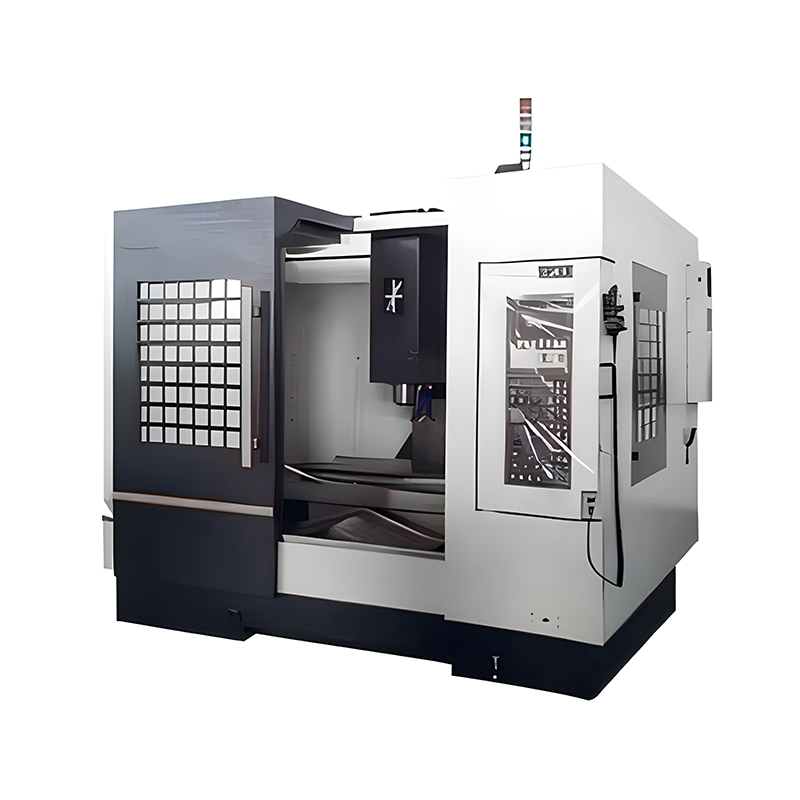 3-Axis, 5-Axis CNC Vertical Machining CenterThe three-axis rail ...View Product →
Choosing the Right Machine for Titanium
Titanium requires a rigid machine, low spindle speed, and high torque. Because of the heat generated, conventional milling of titanium is slow and tool consumption is high. For holes that are deep relative to their diameter, an industrial-grade CNC multiaxis EDM hole popper is often the most efficient solution. The electrical discharge method erodes small holes without contact-force issues and works reliably on hardened titanium surfaces.
 CNC Multi-axis EDM Drilling MachineThis equipment emplo...View Product →
Large-Structure Machining
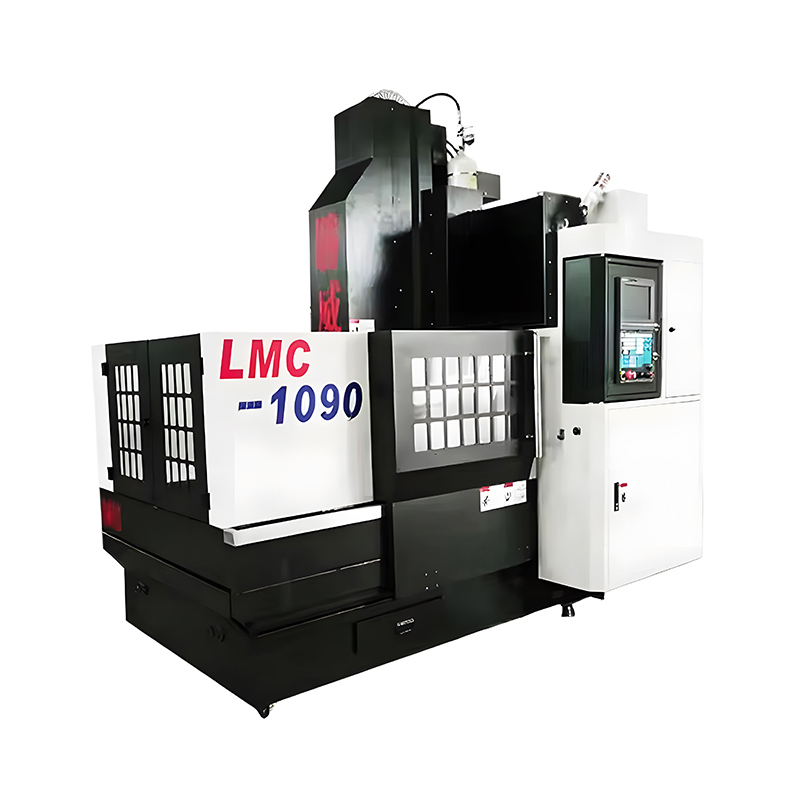
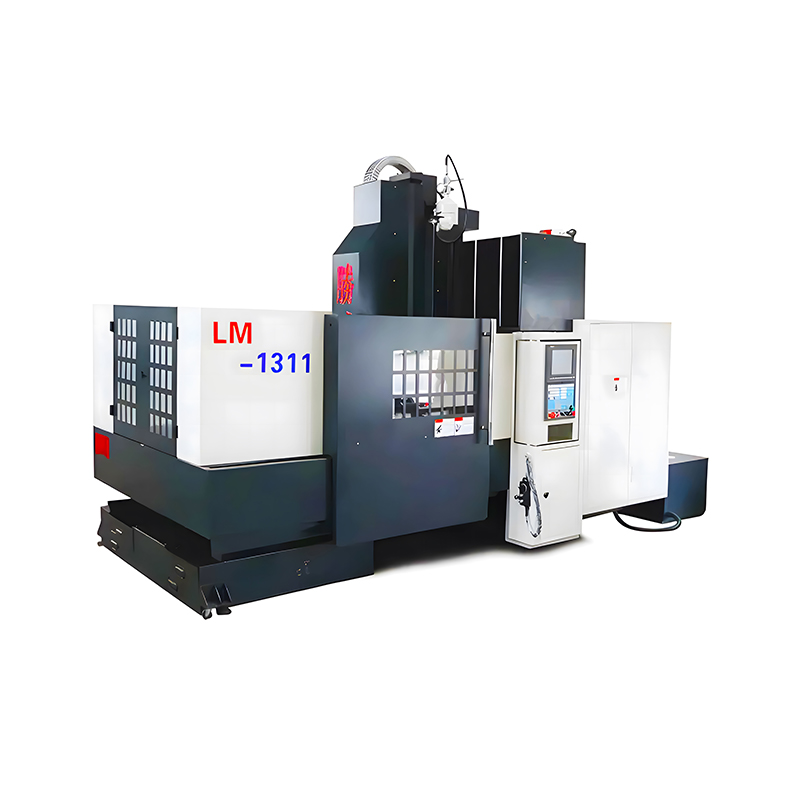
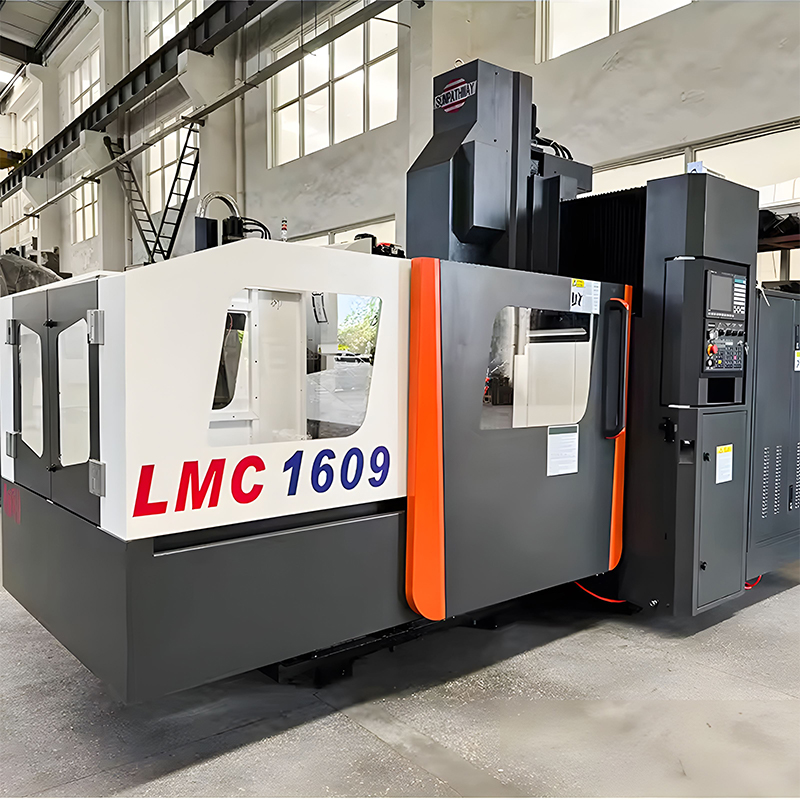
For large aerospace and tooling parts made from titanium or aluminum, a gantry-style milling machine provides the rigidity and travel needed. The high-precision metal milling gantry CNC machine is designed for long structural components where narrow tolerances must be held across the full travel length.
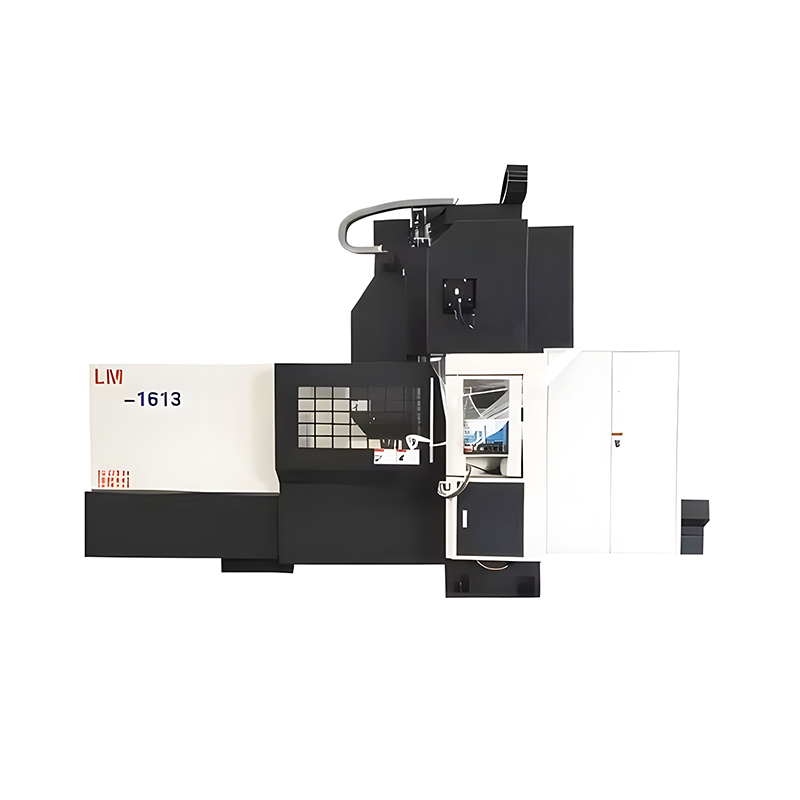 CNC Gantry Milling MachineMain structureThe ma...View Product →
Application Guidelines: When Should You Use Titanium or Aluminum?
There is no universal winner. The right choice comes from the service load, environment, weight target, and production budget. The list below summarizes the practical decision logic.
- Choose aluminum when the part is large, weight is critical, the operating temperature stays below 150°C, and the production volume is high enough that material cost matters.
- Choose titanium when the part carries high stress, sees elevated temperature, operates in seawater or chemicals, or must survive millions of load cycles.
- Choose aluminum for rapid prototyping, because machining trials and design iterations are far cheaper.
- Choose titanium for surgical implants, aerospace structural fittings, premium bike frames, and racing suspension components where failure risk is unacceptable.
If you want to understand how different machine geometries affect precision milling of large components, our CNC gantry milling machine guide explains the relationship between travel, rigidity, and cutting accuracy. For a broader look at production equipment, you can browse our full CNC machine range and see which platform matches your material and part size.
Frequently Asked Questions
Is titanium always stronger than aluminum?
Not in every grade comparison. Commercially pure titanium Grade 2 has a tensile strength similar to 6061-T6 aluminum. The strength advantage of titanium becomes decisive when you use titanium alloys such as Ti-6Al-4V. Always compare the specific alloy, temper, and temperature instead of just the base metal.
Which has a better strength-to-weight ratio, titanium or aluminum?
Titanium alloys have a higher specific strength than aluminum alloys. Ti-6Al-4V delivers about 214 kN·m/kg, while 7075-T6 aluminum delivers about 204 kN·m/kg. The difference is only around 5 percent, which is why weight-critical structures can sometimes be designed in either material.
Is titanium more brittle than aluminum?
No. Titanium is generally more ductile than high-strength aluminum. Typical elongation at break for Ti-6Al-4V is 10–14 percent, while high-strength aluminum alloys often fall in the 5–11 percent range. Titanium also has higher fracture toughness, meaning it absorbs more energy before cracking.
Can titanium and aluminum be used in the same assembly?
Yes, but you must prevent galvanic corrosion at the contact interface. When titanium and aluminum touch in the presence of an electrolyte, aluminum becomes the sacrificial anode and corrodes faster. Isolation washers, anodized coatings, and dry-film lubricants are common ways to manage this risk in bolted joints.
Why is aluminum more common than titanium in consumer products?
Cost and machinability drive the decision. Aluminum is roughly five to ten times cheaper than titanium, machines much faster, and requires less expensive tooling. For consumer electronics, automotive components, and general industrial parts, aluminum provides adequate strength at a fraction of the machining cost. Titanium remains reserved for applications where its specific strength, corrosion resistance, or high-temperature performance justifies the premium.
Does titanium resist heat better than aluminum?
Significantly better. Titanium has a melting point around 1668°C, compared with 660°C for aluminum. More importantly, titanium retains useful mechanical strength at 300–400°C, while aluminum loses a substantial portion of its strength above 150°C. For exhaust systems, engine components, and high-temperature tooling, titanium is the stronger material.
If you are still unsure which metal fits your production run, contact the Sunway team and discuss the part geometry, load conditions, and target volume with engineers who work on CNC equipment every day.
PREV:What Is a 5 Axis CNC Machine? Definition, Types, Applications & Buying Guide
NEXT:Case Hardening Explained: What It Is, How It Works, and Why It Matters for Manufacturing
NEXT:Case Hardening Explained: What It Is, How It Works, and Why It Matters for Manufacturing
Interested in cooperation or have questions?
News
-
-
A clearance fit is an assembly condition in which the minimum hole diameter is always larger than the maximum shaft diameter. In one sentence: the two mating parts are separated by a guaranteed positive gap, so they can slide, ro...
READ MORE -
Heat treatment is a controlled thermal process that changes the mechanical properties of metal by heating it to a specific temperature, holding it there, and then cooling it at a rate chosen to produce a desired internal structur...
READ MORE -
An EDM machine, also called an electrical discharge machining machine, uses controlled sparks to erode electrically conductive metal without direct contact between the tool and the workpiece. The workpiece is submerged in a diele...
READ MORE
Related Products


-
Factory Address
Zhaxi Township Industrial Park, Nantong City, Jiangsu Province, China (west of Huaneng Power Plant)
-
Phone
+86-13615235768
+86-15950816906
-
Fax
+86-513-85632766
-
Email
pan.director@sunwayer.com
Stay Connected
lf you can't find the answer you're looking for, chat with our friendly team.
Stay Connected
Copyright © Nantong Sunway Science and Technology Development Co., Ltd. All Rights Reserved.
China CNC Equipment Manufacturers
Custom CNC Equipment Factory
