


 русский
 Español
Heat treatment is a controlled thermal process that changes the mechanical properties of metal by heating it to a specific temperature, holding it there, and then cooling it at a rate chosen to produce a desired internal structur...
READ MORE
Case Hardening Explained: What It Is, How It Works, and Why It Matters for Manufacturing
Content
- 1 What Exactly Happens During Case Hardening?
- 2 Why Case Harden Rather Than Through Harden?
- 3 The Six Main Case Hardening Processes
- 4 Which Metals Can Be Case Hardened?
- 5 How Is Case Depth and Hardness Verified?
- 6 How Case Hardening Affects CNC Machining and Tooling
- 7 How to Choose the Right Case Hardening Process
- 8 Frequently Asked Questions About Case Hardening
- 8.1 What is the difference between case hardening and through hardening?
- 8.2 How deep does case hardening go?
- 8.3 Can stainless steel be case hardened?
- 8.4 What is the difference between carburizing and nitriding?
- 8.5 Which steels are best for case hardening?
- 8.6 Does case hardening affect corrosion resistance?
- 9 Practical Takeaways for Manufacturing Engineers
Case hardening is a thermochemical surface-hardening treatment that diffuses carbon, nitrogen, or both into the outer layer of a low-carbon steel workpiece. The result is a shallow, hard, wear-resistant shell that surrounds a soft, tough core. This is why gears, pins, shafts, camshafts, and chain components are specified in case-hardened steel rather than in through-hardened material: the surface resists abrasion and contact fatigue, while the interior keeps the flexibility needed to absorb impact loads.
The entire process is controlled by atomic diffusion. Carbon or nitrogen atoms penetrate the steel surface at elevated temperature, forming a hardened case after quenching. Unlike through hardening, which transforms the whole cross-section into martensite, case hardening produces a hardness gradient. Depending on the method, the case depth can range from below 0.05 mm to more than 1.5 mm, and surface hardness can reach 58–64 HRC for carburized parts or 600–1100 HV for nitrided parts (Source: Fractory; Aalberts ST).
What Exactly Happens During Case Hardening?
The chemistry of case hardening is relatively simple. Low-carbon steels containing less than about 0.25% carbon do not respond well to conventional hardening because there is simply not enough carbon to form a strong martensitic structure. Case hardening solves this by adding carbon or nitrogen to the surface before quenching.
- The steel part is heated into the austenite phase, usually between 850 °C and 950 °C for carburizing.
- Carbon atoms from a gas, solid, or liquid medium diffuse into the austenitic grain structure at the surface.
- After a controlled holding period, the part is quenched. The carbon-enriched surface transforms into hard, high-carbon martensite, while the low-carbon core becomes tough lower-carbon martensite or ferrite.
- A tempering step follows to relieve residual stress and adjust the final surface hardness.
The depth of the hardened layer follows a diffusion law roughly proportional to the square root of time. Doubling the process time increases the case depth by a factor of about 1.4, not 2. In practice, gas carburizing at 925 °C produces roughly 0.1–0.2 mm of case depth per hour, so a 0.8 mm case typically requires four to eight hours depending on the steel grade and furnace atmosphere (Source: Wikipedia).
Why Case Harden Rather Than Through Harden?
The decision between case hardening and through hardening is not a matter of which is "better" in general; it depends on the loading conditions of the part. Case hardening is preferred when a component experiences heavy surface wear, rolling contact, or cyclic bending loads. Through hardening is preferred for parts that need uniform hardness across the entire cross-section, such as cutting tools and springs.
| Property | Case Hardening | Through Hardening |
|---|---|---|
| Hardness distribution | High surface, soft core | Uniform across section |
| Typical surface hardness | 58–64 HRC (carburized) | 45–65 HRC |
| Core hardness | Usually 20–45 HRC | Same as surface |
| Impact toughness | High, retained by core | Lower, brittle risk |
| Typical steel grades | SAE 1018, 1020, 8620 | SAE 1045, 4140, 4340 |
| Typical components | Gears, camshafts, pins | Dies, springs, cutting tools |
In production terms, case hardening is also a cost-saving strategy. A gear made from 8620 low-alloy steel costs less to machine in its soft state, then gains surface hardness at the end of the process sequence. Hardening the entire gear would require a higher-carbon or alloy steel, add machining difficulty, and increase the risk of distortion and cracking.
The Six Main Case Hardening Processes
Engineers have six practical routes to case harden steel. Each produces a different case depth, hardness profile, and distortion level, making the choice highly dependent on the part geometry and function.
| Process | Diffusing Element | Temperature | Case Depth | Typical Hardness |
|---|---|---|---|---|
| Gas carburizing | Carbon | 850–950 °C | 0.1–1.5 mm | 58–64 HRC |
| Nitriding | Nitrogen | 480–590 °C | 0.1–0.6 mm | 600–1100 HV |
| Carbonitriding | Carbon + nitrogen | 780–880 °C | 0.05–0.75 mm | 55–62 HRC |
| Cyaniding | Carbon + nitrogen | 800–950 °C | 0.05–0.3 mm | 50–60 HRC |
| Ferritic nitrocarburizing | Nitrogen + small carbon | 570–650 °C | 0.01–0.05 mm | 500–800 HV |
| Flame / induction | None (surface heating) | 850–950 °C | 1–6 mm | 50–60 HRC |
Carburizing: The Most Widely Used Method
Carburizing is performed in gas, liquid salt, or solid media. Gas carburizing dominates modern production because carbon potential can be controlled within ±0.05% C using oxygen probes and infrared analyzers. The process begins with heating the steel to fully austenitic temperature, exposing it to an endothermic carrier gas enriched with propane or methane, and then quenching directly or after a diffusion stage.
Carburized cases are ideal for components that see high contact pressure and sliding abrasion. A transmission gear, for example, may receive a case depth of 0.5–0.9 mm, while a heavy truck axle may use 1.2–1.5 mm. The core of a carburized gear remains at roughly 30–40 HRC, giving the tooth a tough backbone that prevents breakage under shock loads (Source: Metal Supermarkets).
Nitriding: Low Distortion for Precision Parts
Nitriding introduces nitrogen into the steel surface at a relatively low temperature of 480–590 °C, without austenitizing or quenching. Because there is no phase transformation and no water quench, distortion is minimal. Parts can be hardened in their final ground condition with virtually no dimensional change.
The classic nitriding steels contain chromium, molybdenum, and aluminium, such as 34CrAlNi7 or 42CrMo4, which form stable nitride precipitates. Hardness values can reach 1100 HV, significantly higher than carburized cases. Crankshafts, valve stems, and fuel injection components benefit from this method because the thin, hard layer resists wear without affecting the precision-ground geometry.
Carbonitriding: Faster Cycle for Smaller Parts
Carbonitriding adds ammonia to the carburizing atmosphere, so the surface absorbs both carbon and nitrogen. Nitrogen lowers the critical cooling rate, allowing oil or even gas quenching for small-section parts. The process runs at a lower temperature than carburizing, reducing distortion and allowing tighter tolerances.
Typical applications are small automotive components: self-tapping screws, rocker arms, clutch plates, and thin-walled bushings. Case depth is normally limited to 0.05–0.75 mm.
Cyaniding and Ferritic Nitrocarburizing
Cyaniding uses a molten sodium or potassium cyanide salt bath at 800–950 °C. The process adds both carbon and nitrogen, giving a shallow, hard case suitable for small parts such as bolts and wrist pins. Due to the toxicity of cyanide salts, its industrial use has declined in many regions, but it remains effective for high-volume small components.
Ferritic nitrocarburizing, often sold under trade names such as Tenifer or Tufftride, operates at 570–650 °C and produces a very thin compound layer of epsilon iron nitride. It is used for hydraulic components, cam plates, and lathe parts that need mild wear resistance and improved anti-scuffing performance with almost no size change.
Flame and Induction Hardening
Strictly speaking, flame and induction hardening are surface hardening methods rather than diffusion methods. The surface is heated rapidly to austenite temperature and then quenched. Because no carbon is added, the steel itself must contain at least 0.30% carbon. Medium-carbon steels such as SAE 1045, 4140, and 4340 are common choices.
These methods produce a deeper hardened zone, typically 1–6 mm, and are used for large parts where a diffusion process would be too slow or expensive: gear teeth, cam lobes, bearing journals, and rail surfaces.
Which Metals Can Be Case Hardened?
Not all steels respond to case hardening in the same way. The selection depends on the intended hardness, core strength, cost, and whether the part will be quenched in oil, water, or gas.
- Low-carbon steels (up to 0.25% C): Best suited for carburizing. SAE 1018, 1020, and 1026 harden well after carbon enrichment and are inexpensive.
- Low-alloy carburizing steels: SAE 8620, 4320, and 4820 add chromium, nickel, and molybdenum for higher core hardness and fatigue strength.
- Medium-carbon steels: SAE 1045, 4140, and 4340 can be nitrided or flame/induction hardened but are not ideal for carburizing because their core already contains enough carbon.
- Cast iron: Nitriding and ferritic nitrocarburizing are used on cast iron to improve wear resistance, especially for cylinder liners and hydraulic components.
- Stainless steel: Conventional carburizing reduces corrosion resistance. Specialized low-temperature carburizing, often called Kolsterising, can add a very hard case without precipitating chromium carbides, but the process is expensive and limited to specialist suppliers.
A common misconception is that all steels can be case hardened. High-carbon and most tool steels cannot be carburized effectively because they already contain excess carbon; attempting to do so produces a coarse, brittle case. For these materials, nitriding is the correct diffusion-based hardening route.
How Is Case Depth and Hardness Verified?
Quality control for case hardening relies on two measurements: surface hardness and effective case depth. Surface hardness is typically checked with a Rockwell or Vickers indenter. For carburized parts, the specification is usually 58–64 HRC on the finished surface.
Effective case depth is the distance from the surface to the point where hardness drops to a defined threshold. The most common definition is 550 HV, which corresponds to approximately 50 HRC. ISO 2639 defines the standard method for measuring effective case depth; total case depth, by contrast, includes the transition zone where hardness gradually returns to core level.
Production verification is normally performed on a sacrificial part or a test coupon that runs with the batch. Microhardness traverses across a polished cross-section are plotted to determine the hardness profile. In high-volume processing, batch sampling and first-piece inspection give a statistical confidence level sufficient for most manufacturing standards.
How Case Hardening Affects CNC Machining and Tooling
For machine shops and mold makers, case hardening changes the entire machining sequence. A typical workflow machines the part in its soft state, case hardens it, and then performs a final grinding or electrical-discharge operation. This avoids cutting through a hard case in the primary machining stage and keeps tooling costs predictable.
In the mold industry, a hardened cavity with a 60 HRC surface cannot be finished with conventional end mills. This is where electrical discharge machining (EDM) becomes essential. For mould cavities that require electrical-discharge machining after hardening, a compact CNC EDM machine such as the CNC430 small CNC electrical discharge machine for metal mould making produces burr-free cavities in hardened tool steel without inducing mechanical stress.
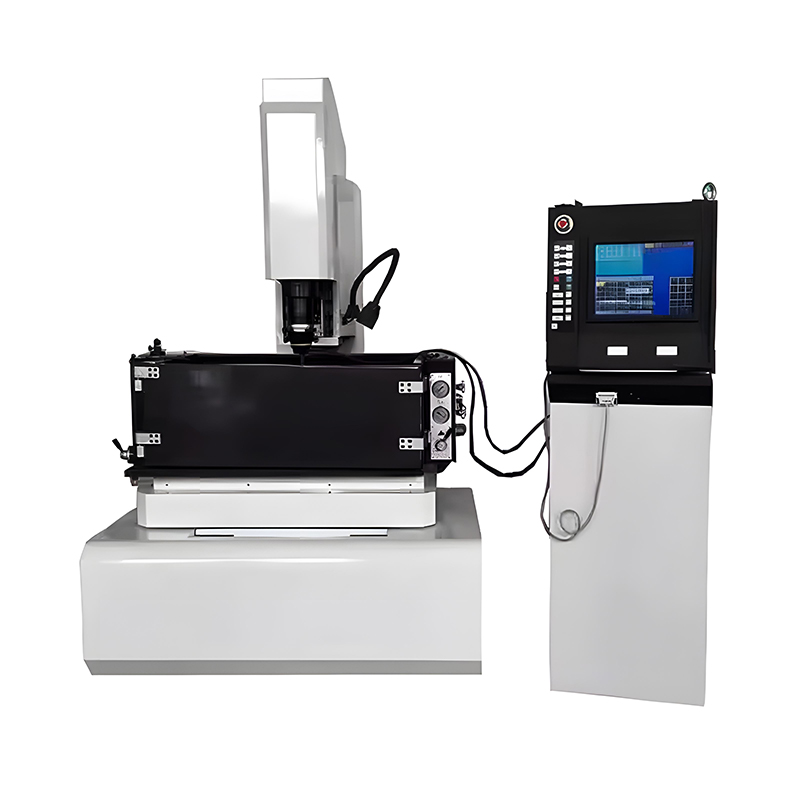 3 Axis CNC EDM MachineThe three-axis CNC E...View Product →
For components that are hardened before final machining, the machine tool itself must be rigid enough to handle interrupted cuts and hard materials. When machining pre-hardened blanks, a rigid hard-rail vertical machining centre such as the VMC855 hard-rail high-speed vertical machining centre handles the vibration and cutting forces better than a linear-guide machine of the same size.
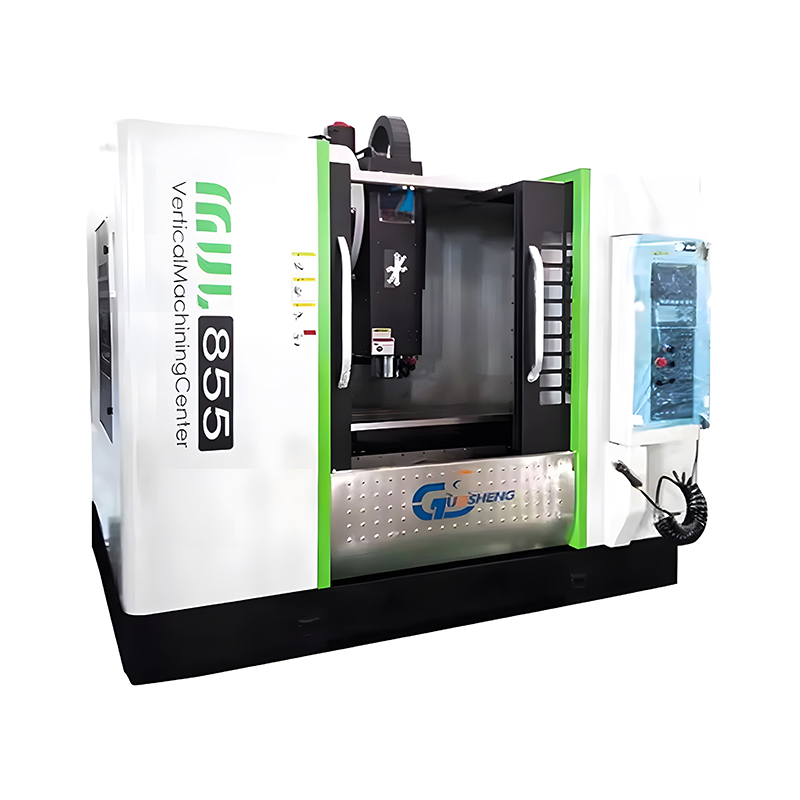 Hard Rail Machining Center Series (Two Lines and One Hard)The hard rail machin...View Product →
Fine contours and shut-off edges in hardened dies are often finished with wire-cut EDM. For hardened gears and dies requiring precision contours, a wire-cut EDM unit such as the SZ36 high-speed cross wire EDM machine delivers repeatable dimensional accuracy without thermal distortion.
 Cross-type Slow Wire EDMThe cross-type slow ...View Product →
If you are reviewing your current hardened component machining setup, it is worth consulting our machining engineers about the correct balance between soft-state milling, hardening, and finishing. For a broader overview of the available equipment, you can also evaluate a complete range of EDM machines suited to different case-hardened workpiece sizes. And if you want to compare the process capabilities of spark erosion versus conventional milling before designing the process route, a detailed comparison of EDM technologies is a practical reference point.
How to Choose the Right Case Hardening Process
There is no universal best process. The right choice is a compromise between case depth, distortion tolerance, production cost, and the material grade already specified on the drawing.
- Define the governing failure mode. Abrasive wear calls for carburizing, while scuffing and adhesion call for nitriding or ferritic nitrocarburizing.
- Check the core strength requirement. If the part needs a tough but strong core, an alloy carburizing steel such as 8620 is safer than plain 1018.
- Assess distortion risk. Nitriding runs at low temperature and produces minimal size change; carburizing requires a quench and will cause more distortion.
- Review tolerance after hardening. Ground surfaces are predictable, but EDM or wire cutting may be needed for complex internal shapes.
- Calculate the batch cost. Gas carburizing is economical for large batches; nitriding is costlier but eliminates finishing for many precision parts.
A practical rule used by many heat-treatment shops is this: if the part needs a hard surface above 58 HRC and the core must stay below 40 HRC, use carburizing. If the part is already ground to final size and cannot tolerate distortion, use nitriding. If the part is small and produced in high volume, carbonitriding offers the shortest cycle time.
Frequently Asked Questions About Case Hardening
What is the difference between case hardening and through hardening?
Case hardening creates a hard surface layer while leaving the core soft and tough. Through hardening transforms the entire cross-section into martensite, giving uniform hardness but lower impact toughness. Case hardening is chosen for parts that need surface wear resistance and core flexibility, such as gears and shafts.
How deep does case hardening go?
Carburized cases typically range from 0.1 to 1.5 mm. Nitrided cases are generally 0.1 to 0.6 mm. Flame and induction hardened zones can reach 1 to 6 mm. The required depth is specified by engineering drawings based on contact pressure and expected wear life.
Can stainless steel be case hardened?
Yes, but not by the same methods used for carbon steel. Conventional carburizing of stainless steel lowers corrosion resistance. Low-temperature carburizing and specialized nitriding processes can produce a hard case while preserving the passivation layer, at a higher processing cost.
What is the difference between carburizing and nitriding?
Carburizing adds carbon at 850–950 °C and requires quenching to form martensite. Nitriding adds nitrogen at 480–590 °C with no quench, giving lower distortion. Carburizing produces deeper cases; nitriding produces harder, thinner surfaces.
Which steels are best for case hardening?
SAE 1018 and 1020 are economical low-carbon choices. SAE 8620 is the most common low-alloy carburizing grade. If the part will be nitrided, chromium-molybdenum alloys such as 4140 or 4340 are widely used, while aluminium-alloyed nitriding steels give the highest hardness.
Does case hardening affect corrosion resistance?
For carbon and low-alloy steels, the corrosion behaviour of the hardened case is not significantly worse than the base material. For stainless steel, standard carburizing is harmful to corrosion resistance. Low-temperature surface engineering is required to keep both hardness and passivity.
Practical Takeaways for Manufacturing Engineers
Case hardening remains one of the most efficient ways to improve the service life of a steel part without increasing its cost dramatically. The process is well understood, standards are mature, and the influence on downstream machining is predictable.
When you plan a manufacturing route for a case-hardened component, remember three things:
- Machine first, harden second, finish third. This is the lowest-cost sequence for most parts.
- Specify the case depth on the drawing in millimetres or tenths of a millimetre, not as a vague word like "hardened".
- Confirm the heat treater uses a verified atmosphere control system and can supply a hardness traverse report for the first article.
With the correct material grade, the right hardening process, and a realistic finishing strategy, case hardening reliably extends component life in everything from small automotive pins to heavy industrial gearing.
PREV:Titanium vs Aluminum: Which Is Stronger and When Should You Choose Each?
NEXT:What Does CNC Mean in Manufacturing? | CNC Meaning, Machines, and Uses
NEXT:What Does CNC Mean in Manufacturing? | CNC Meaning, Machines, and Uses
Interested in cooperation or have questions?
News
-
-
An EDM machine, also called an electrical discharge machining machine, uses controlled sparks to erode electrically conductive metal without direct contact between the tool and the workpiece. The workpiece is submerged in a diele...
READ MORE -
Cutting Tools Are Used to Convert Raw Material into Functional Parts Cutting tools are the hardened, wear-resistant elements that shear away unwanted material from a workpiece to create a finished component. They are applied in e...
READ MORE -
A CNC machine can cut, drill, mill, turn, burn, and shape almost any conductive or composite material with an accuracy that manual machines rarely match. The real question is not what a CNC machine can do in theory, but what a sp...
READ MORE
Related Products

-
Factory Address
Zhaxi Township Industrial Park, Nantong City, Jiangsu Province, China (west of Huaneng Power Plant)
-
Phone
+86-13615235768
+86-15950816906
-
Fax
+86-513-85632766
-
Email
pan.director@sunwayer.com
Stay Connected
lf you can't find the answer you're looking for, chat with our friendly team.
Stay Connected
Copyright © Nantong Sunway Science and Technology Development Co., Ltd. All Rights Reserved.
China CNC Equipment Manufacturers
Custom CNC Equipment Factory
